Bosch Tools: What an Office Buyer Learned From 5 Years of Ordering Maintenance Equipment
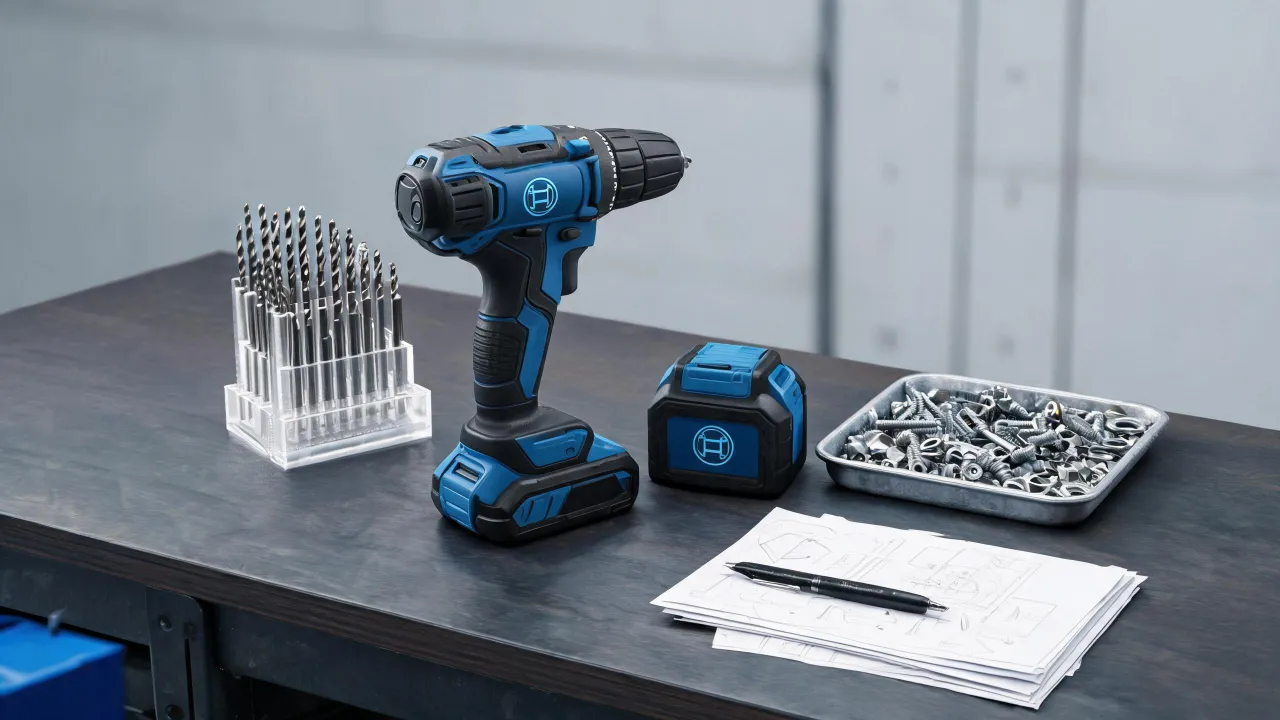
I'm the office administrator for a 120-person manufacturing company. I handle all the maintenance tool purchasing—roughly $18,000 per year spread across 6 vendors. I report to both operations and finance, which means I hear about it from one side if the tools are too expensive and from the other if the tools don't actually work.
It took me around 4 years and maybe 90 tool orders to understand that "which Bosch tool should I buy?" doesn't have one honest answer. It depends entirely on who's holding the tool and what they're doing with it. So instead of giving you one generic recommendation, let me break it down the way I wish someone had for me back in 2021: three scenarios, three different answers.
Scenario 1: You're fixing something that broke
If you need a tool because the break room fridge freezer is making noises, a cabinet door fell off, or a machine guard needs a scratch polished out—you don't need a professional-grade hammer drill. You need something small, versatile, and easy to stash. That's the Bosch rotary tool, typically the GRO 12V-35 or similar 12V model.
We bought one in February 2024 because the Bosch fridge freezer in the break room started that telltale rattling. It turned out the fan blade was hitting an ice buildup. With the rotary tool's cutting disc, we trimmed the ice away without hauling the unit outside—which, honestly, would have turned into a 3-hour job instead of a 25-minute one.
That same rotary tool has since polished a scratch off a metal doorframe, cut a seized screw head off a conference table, and trimmed a plastic cable channel. Nothing spectacular, but for around $120 with a battery and charger, it's been steady value. It's a precision tool, though, not a brute-force one. I learned that trying to cut a hardened steel bolt with it—the bolt won. Don't repeat that experiment.
Scenario 2: You or your crew drills every week
Then the conversation shifts. If your people are drilling into concrete, block, or exterior masonry on a regular basis, the 12V tools aren't even on the table. You need a Bosch brushless hammer drill—specifically an 18V model with SDS-plus chuck, or at minimum a strong combi drill with hammer action.
The brushless motor is what actually matters here. Without going full engineer: a brushless motor runs with less friction and heat, which means longer lifetime and smarter battery use. When you're drilling into reinforced concrete, you'll feel it after the tenth hole. A brushed motor just fades. The brushless one keeps pushing until the bit is through.
From a supplier quote I received in January 2025 (pricing is still roughly current, as far as I know):
- Bosch GBH 18V-45 C Professional, SDS-plus: about $540 with two 5.5 Ah batteries and charger
- Mid-range brushless alternatives: around $380–430
- Budget brushless models: as low as $250–350
A $150 gap looks big on a spreadsheet. But here's the time-certainty math that matters:
In February 2024, our crew had to drill 40 holes in a parking garage for a bollard installation. The previous job with a budget drill had gone badly—overheating, jammed bit changes, the works. We had 2 hours to source a replacement before the garage site visit. I ordered the Bosch on trust, not spec sheets. It drilled all 40 holes without a hiccup. The electricians on standby were billing $220 per hour, so any tool failure would have vaporized that $150 savings in under an hour of idle labor.
That's the part people miss: buying a reliable brushless hammer drill is paying for certainty, not just for power.
Scenario 3: You're outfitting the general maintenance drawer
The most common trap in B2B tool buying is assuming every purchase should be either absolute minimum or maximum. But most companies live in the middle: the maintenance team does light repairs, assemblies, a dryer vent install, maybe some wiring work. They need a versatile kit without a five-figure budget.
For this scenario, a Bosch tool set is the right starting point. A typical 12V or 18V combo kit—drill/driver, impact driver, two batteries, charger, and a case—lands somewhere between $300 and $500 depending on the line. The "tool set price" is the easy part to find online. The harder question is what's actually being drilled, cut, or driven.
A perfect example: someone asked me recently "what size hole saw for 4 inch dryer vent?" The tempting answer is 4 inches because that's the pipe size. It's wrong. The vent's mounting flange and collar need clearance, so the correct hole is 4¼ inches—sometimes 4½, depending on the vent hood's spec sheet. It's the kind of detail that doesn't show up in a product title but absolutely shows up on installation day.
Can a 12V drill handle a 4¼" hole in plywood? Yes, painfully slowly. An 18V brushless drill goes through it without drama. The tool set price difference between the two tiers is often around $100–150. If your team is cutting multiple vents, cable ports, or door viewers per month, the jump is an easy call.
How to know which scenario you're in
After placing roughly 110 tool orders (maybe 120, I'd have to check our system), I've settled on three questions that separate the answers:
- Frequency: How many times per month will this be used? Once a month or less → a rotary tool or compact drill/driver is enough. Multiple times per week → stop debating and get the brushless hammer drill.
- Materials: What's the hardest thing the tool will touch? Drywall, plastic, and wood → 12V is fine. Concrete, brick, thick steel → you need 18V with hammer action. That spec sets your minimum, and everything beyond it is a nice-to-have.
- Downtime cost: What really happens if the tool fails mid-job? If it's "eh, we'll reschedule," the budget pick is fine. If it means a rented machine is idle or a contractor is billing by the hour, then the reliable Bosch tool isn't an expense—it's insurance.
It's tempting to simplify all this into "just buy the most expensive one" or "always buy the cheapest." Both are shortcuts that miss the point. The most expensive tool you don't need is wasted budget. The cheapest tool that fails at the wrong moment costs more than the premium you were avoiding. What I mean is: match the tool to the scenario, and the scenario to the real cost of failure.
One final thing. I'm not going to sit here and tell you that Bosch is the only durable brand on the market. That's not true, and honestly it would make this guide useless. But after five years of managing this budget, I've come to believe that when a job has a deadline and the crew is waiting, the certainty of reliable equipment is part of the price. (Should mention: the $540 hammer drill worked out to about $13.50 per work order over its usage since—not a bad depreciation curve.)
If this feels overwhelming, start with the smallest purchase that solves your most immediate problem. Fixing a fridge freezer? Buy the rotary tool. Drilling concrete every week? Budget for the brushless hammer drill. Equipping a maintenance team for mixed tasks? Get a Bosch combo kit, and check your hole saw diameter before you start cutting.

Maren Jorgensen
Maren Jorgensen is an independent hand tool and torque applications analyst covering wrenches, pliers, screwdrivers, hammers, sockets, ratchets, hex keys, and tool sets. She applies ISO 6789-1 torque-tool conformance principles while examining jaw capacity, leverage, fastener engagement, torque range, accuracy, handle geometry, and material hardness. Her practical guides help tradespeople and procurement teams select suitable tools, plan controlled tightening, and compare durability without relying on brand reputation alone.