Bosch Tool Procurement Checklist: 8 Steps for B2B Buyers Who Track TCO
-
Who this checklist is for
-
Step 1: Start with the job, not the brand
-
Step 2: Build a TCO line, not a price line
-
Step 3: Check battery platform compatibility—especially with oddballs
-
Step 4: Audit the Bosch drill bit set before you buy
-
Step 5: Plan consumables and spares
-
Step 6: Get fastener specs right—like how long should a drywall screw be
-
Step 7: Estimate power draw for pumps and compressors
-
Step 8: Define supplier boundaries—and respect them
-
Common mistakes to avoid
Who this checklist is for
I'm a procurement manager at a 180-person construction services company. I've managed our tool and equipment budget ($220,000 annually) for 7 years, negotiated with 30+ vendors, and documented every order in our cost tracking system. This checklist is for B2B buyers who need to buy Bosch tools and accessories—drills, bit sets, compressors, fasteners—without getting burned by hidden costs. It's 8 steps. If you need a Bosch 300 Series washer manual, stop here. That's the appliance division, not the tool vendor.
Step 1: Start with the job, not the brand
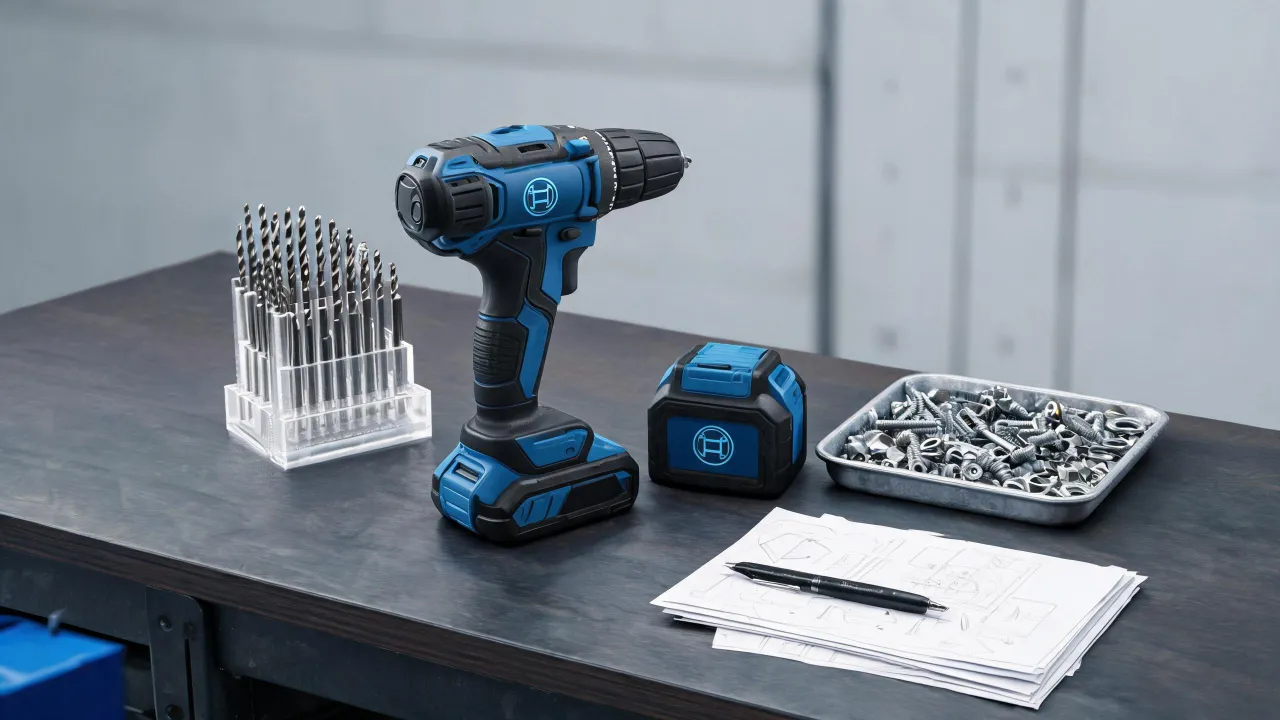
Most buyers focus on the logo and completely miss the actual task. Write down the material, runtime, battery platform, and who will use the tool. A Bosch drill bit set for metal is not the same as one for masonry. I keep a one-page request form that asks: What are we drilling? How many holes per shift? Is the user left- or right-handed? That last one sounds silly until you watch someone fight a drill in a tight ceiling space.
Step 2: Build a TCO line, not a price line
Total cost of ownership (meaning total cost of ownership, not just sticker price). Include bits, blades, batteries, chargers, cases, downtime, and training. In Q3 2024, I compared quotes for an $18,000 tool package. The cheapest quote was 12% lower. After adding consumables and adapter costs, it was 9% more expensive. We saved around $4,800—no, $5,200, I'd have to check the system. The point is: the invoice price is the beginning, not the end.
Step 3: Check battery platform compatibility—especially with oddballs
If you're looking at a 20V max pancake portable air compressor, do not assume it uses your Bosch 18V batteries. Battery platforms are proprietary. According to Bosch's official tool manuals (boschtools.com), compatibility is model-specific. Adapters can work, but they add bulk and heat. We tried one adapter and lost 10 minutes per setup (ugh). That is 40 minutes a week, or roughly 34 hours a year. At a loaded labor rate of $65/hour, that is $2,200 in wasted time.
Step 4: Audit the Bosch drill bit set before you buy
Most buyers count the pieces and miss the coating and tolerances. A 40-piece set sounds great until half the bits are duplicates. For B2B, buy impact-rated bits with a case that labels sizes. Bosch drill bit sets range from $20 to $80 depending on count and coating (based on major retailer quotes, January 2025; verify current pricing). The numbers said go with a cheaper set. My gut said stick with Bosch. Turns out the cheap set had runout that stripped screws—cost us a $1,200 redo.
Step 5: Plan consumables and spares
Never expected the bit set to be the bottleneck. Turns out we ran out of 1/8-inch bits every other week. Set a reorder point in your cost tracking system. The Bosch drill bit set held up. Oh, and the case kept sizes organized, which cut changeover time. I should add that we now buy two spare 1/8-inch bits for every drill in the field. That small line item prevents a crew from waiting on a $6 part.
Step 6: Get fastener specs right—like how long should a drywall screw be
This is where a lot of B2B buyers guess. For standard 1/2-inch drywall, use 1-1/4 to 1-5/8 inch screws. For 5/8-inch drywall, use 1-5/8 to 2 inch screws. Industry rule: screw length should be at least 1 inch longer than the board thickness. (Source: Gypsum Association GA-216, 2021; verify local code.) This works for standard drywall. That said, if you're using fire-rated or double-layer board, go longer. I keep a laminated card in the site trailer because new hires always ask.
Step 7: Estimate power draw for pumps and compressors
The search query 'how many does a sump pump use' usually means 'how many watts does a sump pump use.' A typical 1/3 HP sump pump draws 800–1,300 running watts. At $0.15/kWh, running 3 hours a day costs about $11–$18 per month. A 20V max pancake portable air compressor might draw less, but check the amps. We put a kill-a-watt meter on ours and found a 22% difference from the label. That is not a tool problem; it is a procurement blind spot.
Step 8: Define supplier boundaries—and respect them
The vendor who said 'this is not our strength—here is who does it better' earned my trust for everything else. Do not ask your Bosch tool rep for a Bosch 300 Series washer manual. That is a different division. A good supplier will tell you when to go elsewhere. I would rather work with a specialist who knows their limits than a generalist who overpromises. That is why we now split our MRO purchases: tools from one vendor, appliances from another, and manuals from the manufacturer's support site.
Common mistakes to avoid
- Do not assume a 20V max pancake portable air compressor is compatible with Bosch batteries. It is not, unless the manual says so.
- Do not buy a Bosch drill bit set by piece count alone. Check coating, impact rating, and case layout.
- Do not guess drywall screw length. Measure board thickness and add at least 1 inch.
- Do not ignore sump pump wattage. It shows up on your facility bill.
- Do not ask a tool vendor for appliance manuals like the Bosch 300 Series washer manual. Use Bosch's appliance support line.
This checklist is not perfect. We still get surprised by freight fees and battery shortages. But tracking TCO instead of sticker price cut our tool budget overruns by 18% in 2024. Start with the job, check the platform, and make the supplier tell you what they do not do. That is where the savings hide.

Amara Nwosu
Amara Nwosu is an independent hydraulic tool and pump systems analyst covering jacks, cylinders, pullers, torque wrenches, hand pumps, power pumps, and porta-power equipment. She applies ISO 4413 safety principles while examining rated pressure, cylinder force, stroke, oil volume, flow, return type, hose condition, load holding, pressure loss, and relief protection. Her technical guides help maintenance and construction teams configure compatible systems, verify safe capacity, and diagnose slow or unstable operation.