Small Orders Are the Best Supplier Test I Know (Even for a Bosch Compact Washer)
I'm the office administrator for a 38-person property maintenance company. My title doesn't include the word procurement, but I manage roughly $180,000 in annual buying across nine vendor relationships. That includes office supplies, appliances for the rental units we manage, and the tools our maintenance crews keep asking for. I'm not a professional buyer. I'm the person who makes purchases easy for accounting to pay.
After five years in this seat, I've landed on a simple rule: the true test of a vendor isn't how they handle a big order. It's how they handle a small one.
A big order gets attention. A small order gets whatever process the supplier has left when the bells and whistles are stripped away.
Small orders expose the process that big orders hide
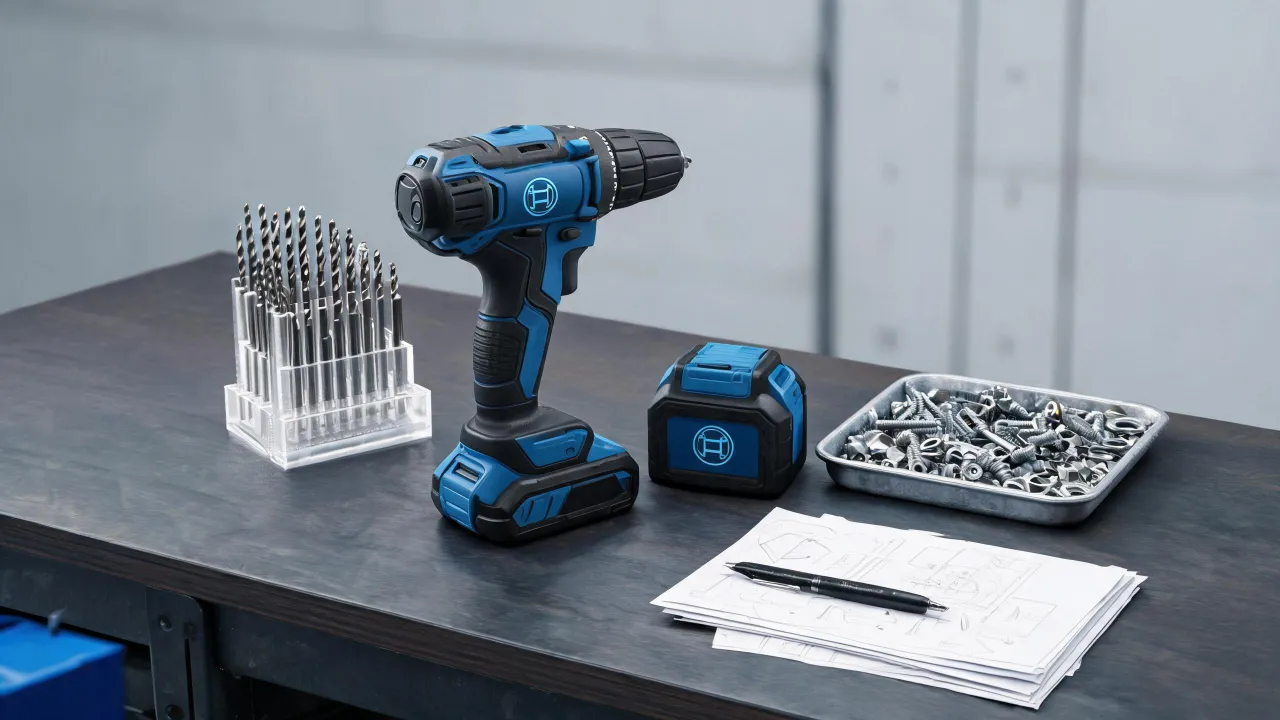
In 2024, one of our maintenance guys asked me to find a Bosch Blue Xtreme hammer drill bit BXH12. It's a low-cost SKU that no one outside the trade knows by heart. We needed it for a concrete repair in a parking garage. I called the first supplier and got a cheerful promise that it would be sent to the branch. Then nothing. When I followed up, they said it was backordered. Maybe true, but they didn't tell me until I called.
The next supplier asked what material we drill most often and what drill it was going into. I didn't know, because I'm not a tool engineer. But the fact they asked told me that they deal with people who actually use this stuff. The order total was small enough that a vendor could have brushed it off. They didn't.
That experience changed how I think about reliability. If a vendor's process works on a $40 part, it will work on a $4,000 part. If it doesn't work on the small part, a big order doesn't fix the process. It just gives more people a chance to hide it.
One appliance order was a better test than any vendor presentation
The same rule applies beyond tools. A few months later, I had to source a Bosch 500 Series compact washer WGB24600UC for one of the units we manage. It wasn't a volume order. It was one appliance that had to fit a specific space and be delivered when the tenant was between lease dates.
One supplier asked if I had the right model number and then stopped replying. Another couldn't produce an invoice our finance department could accept. The vendor that won the order did two basic things: confirmed the model was current and sent correct paperwork. They weren't the cheapest option. They were the one whose process didn't fall apart on a low-volume request.
A week later, the same maintenance team sent over two more requests. One said pipe wrench aluminum, and the other said mechanics tool set 80942. No part numbers, no brand names, no long explanation. The plumber wanted an aluminum pipe wrench to reduce weight during overhead work, and our fleet tech had used the mechanics tool set 80942 before and wanted the same one. The supplier that had handled the drill bit order pulled up both items, confirmed sizes, and shipped them together. I didn't have to justify why the order was small. They already understood.
What are the best garden tool storage solutions?
I get this question in my inbox a couple of times a year. People expect a link to a product. My answer is now different because of the same lesson.
The best garden tool storage solution is not a name or a model. It's a conversation. You need to know which tools need to be locked, how often people need access, and whether items have batteries that shouldn't bake in a metal shed during the summer. For our crew, the answer ended up being a wall-mounted rail system, one shelf for buckets and chemicals, and a separate drawer unit for battery packs and small parts. If you buy a storage product before asking those questions, you'll end up with an impressive rack that nobody uses consistently.
I also look at environmental claims the way the FTC's Green Guides (ftc.gov/green-guides) tell marketers to look at them. If a company calls a storage product recyclable, they should be ready to say where and how it is recyclable. It's a small detail, but it tells me whether the vendor thinks about the whole product lifecycle or just the sale.
I'm not saying small orders deserve more time than they're worth. I'm saying suppliers should be transparent about minimum orders and capabilities. If a vendor needs a $500 minimum to stay profitable, fine. What I can't use is a supplier who accepts a small order, ignores status questions, ships late, and then sends an invoice that doesn't match the original quote.
I still second-guess this approach sometimes. After choosing one vendor for the compact washer, I worried I was being too picky. What if the cheaper quote was fine and I just made things complicated? Then the cheaper quote ghosted me on a delivery date, and I relaxed. The small-order test isn't about being difficult. It's about watching how a company behaves before the stakes are high.
Final thought: stop apologizing for small orders
For years, I started every difficult call with an apology for order size. I don't do that anymore. If a vendor treats a small order like a problem, that's not a rejection of the order. It's data.
I can only speak for a business our size. If you're a large company with mandatory supplier portals and procurement teams, the test might look different. But the core question stays: does the vendor's process treat the request seriously?
The vendors I've kept all passed. They answered, they confirmed stock, they sent accurate invoices, and they didn't act like I was a nuisance. Funny enough, our biggest current supplier relationship started with an order for a Bosch Blue Xtreme hammer drill bit BXH12 and a few odd accessories. Nobody promised a long-term partnership. They just handled the small order as if it mattered. That's why they eventually got bigger ones.

Maren Jorgensen
Maren Jorgensen is an independent hand tool and torque applications analyst covering wrenches, pliers, screwdrivers, hammers, sockets, ratchets, hex keys, and tool sets. She applies ISO 6789-1 torque-tool conformance principles while examining jaw capacity, leverage, fastener engagement, torque range, accuracy, handle geometry, and material hardness. Her practical guides help tradespeople and procurement teams select suitable tools, plan controlled tightening, and compare durability without relying on brand reputation alone.