The Bosch 18V Connected-Ready Hammer Drill/Driver Kit: A Procurement Manager's Scenario Guide
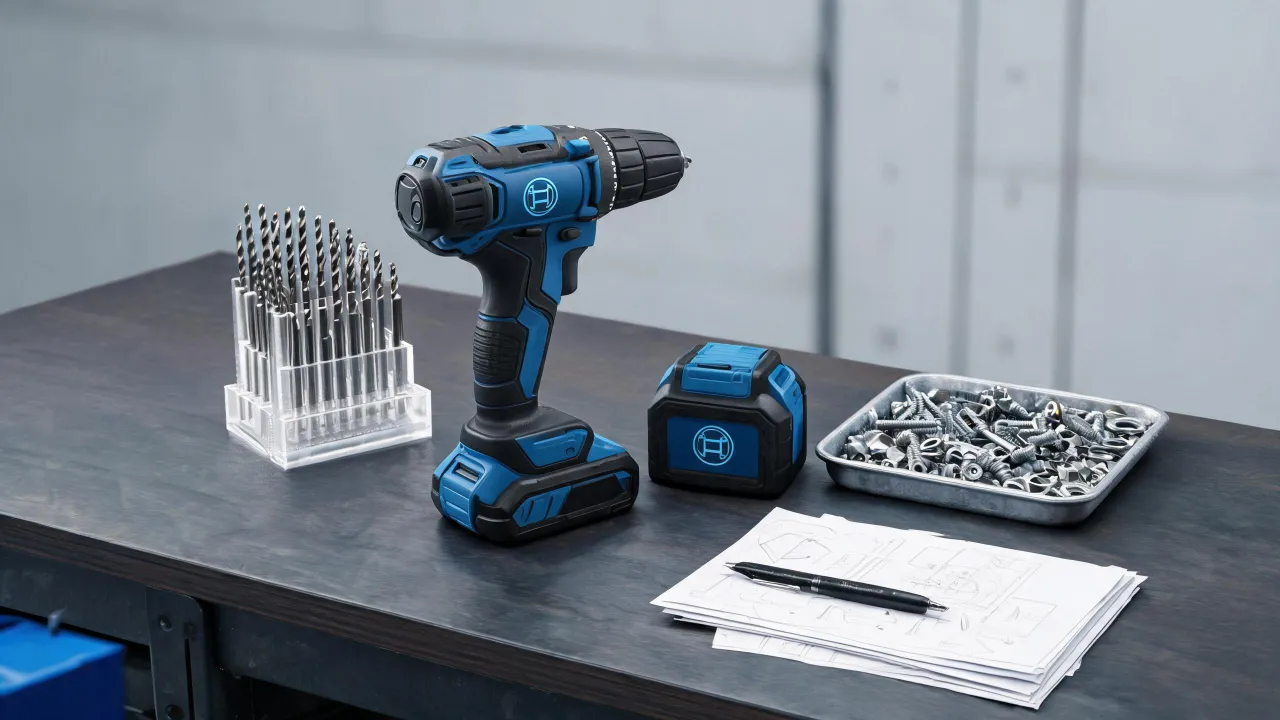
I manage procurement for a 40-person facilities maintenance company. I've controlled our tool and repair budget for six years, tracked every invoice in our cost system, and built enough spreadsheets to know that 'cheapest upfront' and 'cheapest overall' are two different numbers.
If you're weighing the Bosch 18V connected-ready hammer drill/driver kit, you're probably in one of three scenarios. I'll walk through each one and, at the end, give you a quick way to figure out which one applies to you.
First, Define the Work, Not Just the Tool
Here is the part that too many reviews skip. The tool is good, but a good tool is not automatically a good purchase. The right purchase depends on what actually makes you money.
Ask yourself one question: what does your crew do most on a typical week? If the answer is 'drill and drive all day,' the recommendation is different from someone who mostly repairs broken equipment. And if you have one person doing everything, the answer usually starts with the highest-frequency task, not the most impressive tool.
Scenario 1: The Bosch 18V Connected-Ready Hammer Drill/Driver Kit as Your Daily Workhorse
If your team drives hundreds of screws, drills cabinet hardware, mounts brackets, and works on rough or finish material for most of the day, this kit is worth a serious look. Bosch makes a durable 18V hammer drill/driver, and the kit format means you're not piecing together batteries and a charger later.
From a cost-control view, the connected-ready feature is not the main reason to buy it. For a two-person shop, I wouldn't pay a premium just for mobile app connectivity. I'd pay it because the drill is fast enough, reliable enough, and part of a shared battery platform.
That battery platform is where the real savings show up. Once you own the Bosch 18V system, adding another bare tool like an impact driver costs less because the battery, charger, and case are already on your shelf. In our quarterly purchasing reviews, that single decision saves more money than any coupon or discount.
Scenario 2: You Keep Asking, Can I Use a Cordless Drill for Masonry?
The short answer is: yes, for light masonry, and no, for heavy concrete work.
If you need to set a few anchors in brick, block, or mortar, a cordless hammer drill with a carbide masonry bit is enough. The Bosch 18V connected-ready hammer drill/driver kit has hammer mode, and I've used it for small anchor holes in block walls. It does the job. You need to switch to hammer mode, start at moderate speed, and let the bit cut. Pushing harder doesn't speed it up.
The limit shows up when you move to poured concrete or larger holes. In 2023, I tried to save a rental cost by using a hammer drill for 32 anchor holes in a concrete wall. It finished eventually, but it took three hours, went through two bits, and left the crew tired. An SDS-Plus rotary hammer would have finished in under an hour. I still remember that because the drill was not bad. The drill was the wrong category of tool for that job.
So, can you use a cordless drill for masonry? Yes, for the occasional masonry task. For a steady diet of concrete work, buy or rent the right tool and use the hammer drill/driver for what it does best.
Scenario 3: Your Job Is Repair, Not New Construction
Repair work changes the calculation because the bottleneck is often taking things apart, not making new holes. A hammer drill hammers forward to help cut masonry, but it is not an impact wrench. It will not loosen rusted car, mower, or machine fasteners the way an impact driver or impact wrench can.
If lawn mower repair is part of your business, or if you maintain equipment with rusted bolts, add an impact tool and extraction sockets to the budget before you spend too much on drill upgrades. A drive bolt biter impact deep extraction socket is one of those repair accessories that earns its place quickly. It fits over a damaged or rounded fastener, bites into it, and lets an impact tool break it free. On seized lawn mower blade bolts, that can turn a two-hour fight into a ten-minute task.
Now for the other repair-related search term: 'certified Bosch appliance repair.' That's a service decision, not a power tool decision. If your business manages facilities with Bosch appliances, check the warranty before opening anything up. Many warranties require service by an authorized provider, and a non-certified attempt can turn a small repair into a full replacement.
I get why people skip the certified route. The quote can look high. But I've also written off equipment after a DIY repair made a sealed system worse. That invoice is much harder to explain to ownership.
How to Tell Which Scenario You're In
Grab the last ten work orders or invoices from your own system. Count the actual tasks. Most of your time was spent on:
- Drilling and driving screws into wood, metal, or drywall. That leans toward purchasing the kit as your main workhorse.
- Occasional masonry anchors and general light drilling. The kit works, especially with good masonry bits. For a large concrete project, plan an SDS tool into the job cost.
- Disassembly, rusted fasteners, and equipment repair. Buy the impact driver or impact wrench first, then add the extraction socket set.
If you run a mixed operation like ours, you will probably end up with both a drill/driver kit and an impact tool. That is normal. Buy in the order that matches your most expensive problem, not the order that looks best in a product photo.
One more thing: if a supplier treats your first order like it's too small, walk away. When I was a one-battery operation, the vendor who took my small order seriously got my later orders. Small doesn't mean unimportant. It means not yet big.
Trust me on this. I've signed off on a lot of tool purchases, and the ones that paid off were never the ones that looked the most impressive. They were the ones that matched the work and kept working. The Bosch 18V connected-ready hammer drill/driver kit is a good match for scenario one. For scenario two, it is adequate with the right bits. For scenario three, the drill is only part of the answer.

Maren Jorgensen
Maren Jorgensen is an independent hand tool and torque applications analyst covering wrenches, pliers, screwdrivers, hammers, sockets, ratchets, hex keys, and tool sets. She applies ISO 6789-1 torque-tool conformance principles while examining jaw capacity, leverage, fastener engagement, torque range, accuracy, handle geometry, and material hardness. Her practical guides help tradespeople and procurement teams select suitable tools, plan controlled tightening, and compare durability without relying on brand reputation alone.