The Bosch Tool Mistakes That Cost Me $2,000 (and How a Little Spec-Checking Could’ve Saved It)
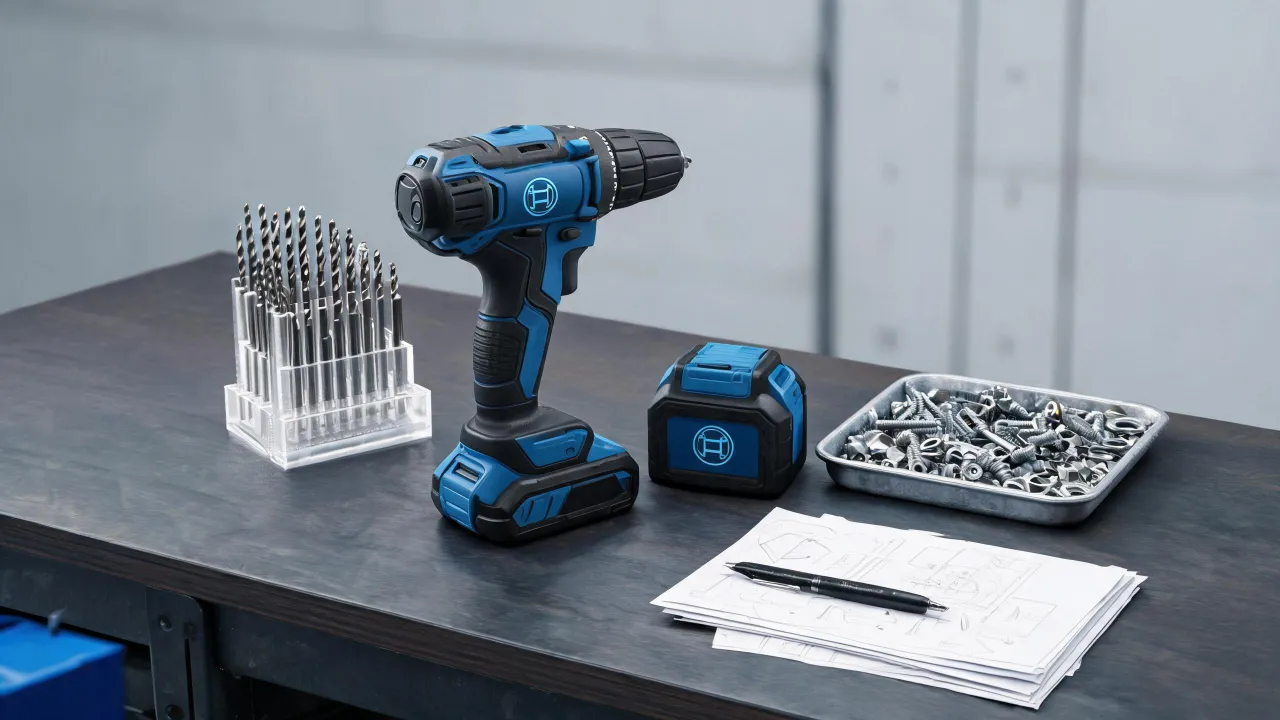
If you've ever used a Bosch tool, you know the feeling: it's solid, it's precise, and it just feels right in your hand. For years, I thought that meant I could relax. I'd pick a German-engineered drill, a blue rotary hammer, a belt sander, and trust the brand to handle the rest.
That assumption cost me about $2,000 in wasted parts, repairs, and rework between 2017 and 2024. Not because the tools failed. Because I failed them. Trust me on this one: brand quality doesn't replace spec-checking.
The surface problem: I trusted the brand instead of the spec
In 2017, I ordered a batch of Bosch tools for our maintenance crew. The order included a cordless drill, a jigsaw, and an impact driver. I approved the whole thing without checking accessory specs—just assumed I could use the drill bits and blades we already had.
First day on the job? The drill chuck couldn't hold a worn bit straight. The jigsaw blade I grabbed (from a different brand) had a different shank. Cue a half-day delay, an emergency delivery, and the first red mark on my reputation. I saved exactly $0 by not checking. Spent $90 on rush shipping and new accessories.
That's the classic brand halo mistake. People think a big name means foolproof. Actually, the tool works well when you use it right—the causation runs the other way. The quality is there, but the responsibility is on you to match the right accessory to the right tool.
The deeper issue: specs, not swagger
The real problem isn't tool quality. It's that most of us don't read the technical documents. We rely on our gut, on “it should fit,” on advice from someone who owns a similar-looking tool. But Bosch makes engineered products—the same engineering that gives you power and safety also creates precise requirements for parts, clearances, and settings.
What was best practice in 2020 may not apply in 2025. The fundamentals haven't changed, but the execution has transformed. Today, official specs and diagrams are a few clicks away. There's no excuse for guessing.
The washer/dryer combo that overheated my laundry room
In 2021, my own laundry room became the site of lesson #2. I had a simple plan: install a new Bosch washer and dryer combo in an existing closet. It looked like enough space. I didn't check the manual's clearance diagram. The result? The dryer overheated after 20 minutes, kicked off error codes, and the room smelled like scorched plastic.
The manual called for 5 inches of clearance at the back and a vent that could handle at least 10 feet of equivalent length. My closet had about 2 inches of clearance and the existing vent was crushed. The repair visit cost $180, plus $40 in new venting parts, plus three evenings of running loads late because the cycle kept tripping.
I'm not a clothes-dryer engineer—sticking my foot in my mouth there. But what I can tell you from a maintenance manager's perspective is that clearance specs are real, and they're in the manual for a reason.
The T30 air compressor parts diagram disaster
Then there was the compressor. A colleague asked me to order parts for a T30 air compressor, a vintage but reliable unit. He said “just get another valve kit.” Instead of downloading the t30 air compressor parts diagram and comparing part numbers, I ordered what I thought was the right kit from an online parts dealer.
It didn't fit. Of course it didn't. The valve I bought was for a later revision, not the original T30. The machine sat broken for two days while a new part shipped. In the meantime, we had to rent a portable compressor at $65 per day. Total extra: $130 rent + $25 return shipping + my self-esteem.
Actually, even the return shipping stung. According to USPS (usps.com), oversized packages are priced by size, not just weight, so sending back a valve kit cost me $25—more than I'd spent on the part itself. All because I skipped the parts diagram.
The 5903RK circular saw blade mistake
Another classic error: I bought a cheap aftermarket blade for my Bosch 5903RK 235mm circular saw. It was $20 less than the Bosch blade. I thought, “It's a saw blade with the right outer diameter; how different can it be?”
The arbor hole was slightly too small, so I had to wiggle it. The blade wobbled. The saw vibrated badly, burned every cut, and kicked back once. I stopped using it and eventually had to buy a professional blade for $70. The $20 savings turned into a $70 new blade plus $150 in ruined plywood and trim.
That “one blade fits all” thinking comes from an era when circular saws used standard 5/8-inch arbors. Modern saws like the 5903RK may use a 20mm arbor or a different kerf. And per FTC guidelines (ftc.gov), product claims have to be truthful and substantiated—so if Bosch's spec sheet says the arbor size is 20mm, you can usually trust it. I should have checked the sheet before I bought.
The centrifugal pump flow rate failure
This one is my most embarrassing. For a water transfer setup, I needed a centrifugal pump that could deliver a certain flow rate. I guessed. I didn't use the formula Q = A × v—where Q is flow, A is cross-sectional area, and v is velocity.
In metric, I had a pipe internal diameter of 0.1 m and wanted around 1 m/s velocity. So Q ≈ π × (0.05)² × 1 = 0.00785 m³/s, or about 28.3 m³/h. I picked a pump rated for 10 m³/h. Barely half the flow. It took us two extra days to fill the same tank, and the pump ran constantly, wearing out the seals.
If you're serious about this, check “how to calculate flow rate of centrifugal pump”—but from a seat-of-the-pants guy, the basic math would have saved me from ordering the wrong unit. I'm not a fluid dynamics expert by any means, so take my version with a grain of salt. The formula is standard, but pump curves and friction losses matter too.
What it all cost
Let's add it up:
- $90 rush shipping and wrong accessories (2017)
- $180 dryer repair + $40 vent parts (2021)
- $130 compressor rental + $25 return shipping (2022)
- $70 new blade + $150 ruined material (2023)
- Wrong pump shipping and replacement: $200 ($450 total, including wasted pump)
That's around $935 in direct cash, plus days of delay and a few uncomfortable conversations. When I think about the fact that every mistake could have been avoided by reading a spec sheet, a parts diagram, or a basic engineering formula, I cringe. The tools themselves worked fine. I didn't.
The simple three-step check that fixed it
Since the start of 2025, I've been using a short checklist before I buy, install, or repair anything Bosch-branded. It sounds basic, but it's saved me from repeating old mistakes.
- Download the official spec sheet or parts diagram. For a tool, look up the model number (like the 5903RK) and read the blade/accessory requirements. For a compressor, find the exact T30 air compressor parts diagram and match part numbers.
- Calculate, don't estimate. If it's a pump, use Q = A × v. If it's an appliance, measure the space against the clearance specs in the manual.
- Buy the correct part/accessory the first time. The “cheap” alternative only pays off if it matches specs and safety requirements. It doesn't when the arbor is wrong or the valve is for a different revision.
Notice what's missing from that list: “buy a better brand.” Because the issue was never Bosch's quality. It was my attitude of assuming my experience was enough. That works for a lot of things, but not for engineering details. The industry has changed, and even something as simple as a washer/dryer combo requires reading the manual. The old mentality of “weld it, tape it, improvise” is out. The new mentality is “check the diagram, look up the formula, verify the clearance.”
You don't need to be an engineer. You need to be honest about what you don't know, and then take 10 minutes to look it up.

Maren Jorgensen
Maren Jorgensen is an independent hand tool and torque applications analyst covering wrenches, pliers, screwdrivers, hammers, sockets, ratchets, hex keys, and tool sets. She applies ISO 6789-1 torque-tool conformance principles while examining jaw capacity, leverage, fastener engagement, torque range, accuracy, handle geometry, and material hardness. Her practical guides help tradespeople and procurement teams select suitable tools, plan controlled tightening, and compare durability without relying on brand reputation alone.