The Real Reason Your Tools Fail at the Worst Possible Time (It's Not Bad Luck)
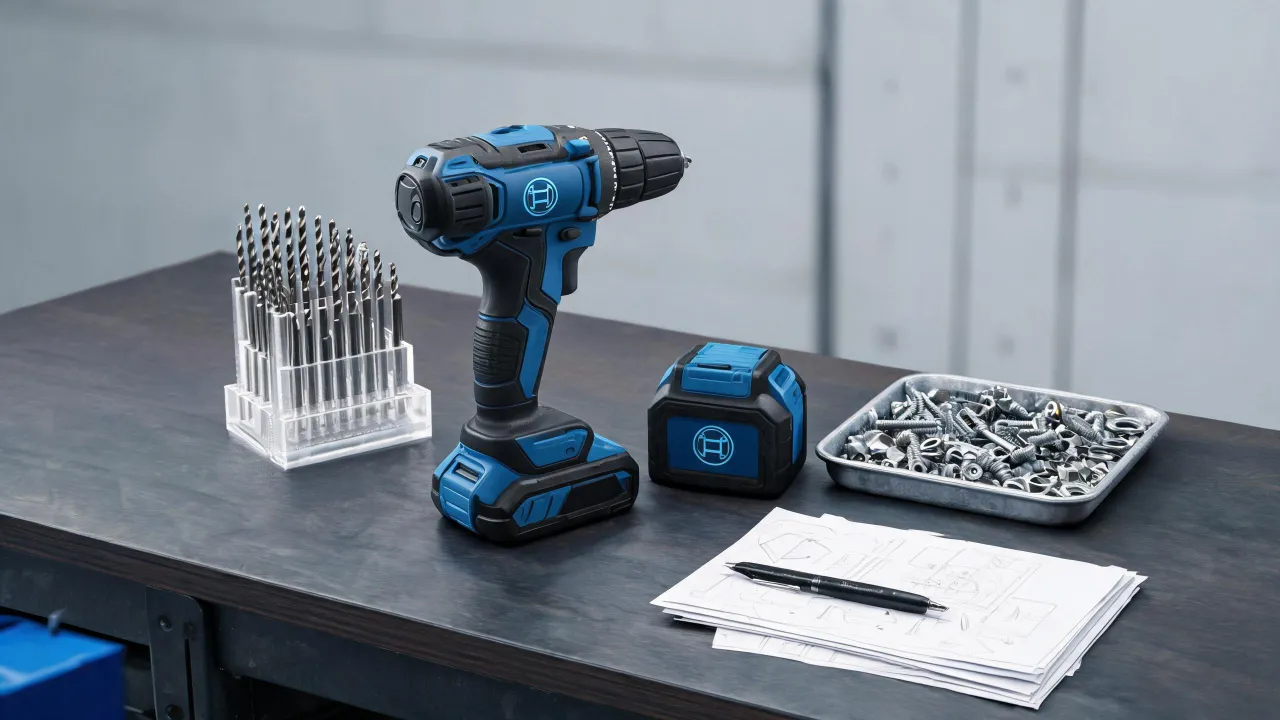
It's 5:47 AM and Something Just Died
I coordinate emergency orders for a company that handles clients on tight deadlines. Most days, that means rush shipping. Some days, it means replacing a tool that failed at the worst possible moment.
One Tuesday in March 2024, a crew called me from a job site. Their pressure washer — a bargain model they'd bought 18 months earlier — had died two hours before the client was scheduled to arrive. Post-construction cleanup, 20 units, noon deadline. Without a working washer, the job wasn't happening.
They asked if I could get a Bosch pressure washer to them within six hours. I could. We did. But it was a scramble, and they paid $340 in expedited shipping on top of the unit itself. That's not a huge number in isolation. But it was avoidable.
What stuck with me wasn't the money. It was the fact that this wasn't bad luck. It was predictable. And I've seen the same pattern repeat itself dozens of times since.
The Deeper Problem: You Buy Tools at the Wrong Moment
Most people don't plan tool purchases. They wait until they need something, and then they buy it. That's fine for a $15 wrench. It's a problem when it's a $300 pressure washer, a $400 rotary hammer, or a sump pump system z150 that's supposed to keep a jobsite dry through the rainy season.
When you buy in a hurry, you default to two criteria: price and availability. Not durability. Not serviceability. Not whether the tool is designed for the kind of work you're about to throw at it.
I've done it too. Back when I was managing a smaller operation, I bought a knockoff impact driver because it was $40 cheaper than the Bosch version and it shipped overnight. It lasted eleven weeks. Looking back, I should have paid the extra $40 and waited the two days. At the time, the overnight shipping felt like the smart move. It wasn't.
Here's what most people don't realize: the moment you're buying a tool in a panic, you've already lost. You've lost the ability to compare specs properly. You've lost the ability to wait for a better price. You've lost the ability to read reviews carefully. All you can do is pick the fastest option that fits the budget, and hope.
Why This Keeps Happening Across Different Tools
Take something as specific as a pliers wrench 86 03 180. People buy it because it looks versatile and the price is reasonable, then assume it'll handle any fastener they throw at it. It won't. It's designed to grip specific size ranges cleanly. Push it past that, and it'll either slip or round the nut. Now you've got a stripped fastener and a tool that's less useful than you thought.
Sump pumps work the same way. A sump pump system z150 has a rated duty cycle and flow rate. Install it in an application that demands continuous operation, and it'll burn out. When? Usually during the heaviest rain of the year. That's how these things go.
Impact drivers have their own version of this trap. Every few weeks someone asks me: do you need special bits for impact driver? The answer is yes — standard bits aren't built for the torque an impact driver delivers. They snap, strip, or cam out. But if you've never used one before, you won't know to ask until you're already on the job and your only Phillips bit just sheared off inside a screw head.
What It Actually Costs You
Let me run the math on a typical scenario. A contractor buys a $180 pressure washer instead of a $340 Bosch unit. Saves $160 upfront. Feels like a win.
Eighteen months later, it dies mid-job. They buy the Bosch anyway — because now they need reliability, fast. $340. Expedited shipping to get it there by noon: $340. Three hours of a four-person crew standing around waiting: roughly $300 in labor. And a near-miss on a deadline that carried a $2,000 penalty clause.
Actual cost of the original "savings": $180 + $340 + $340 + $300 = $1,160. The Bosch option, bought correctly the first time, would have cost $340 and been done.
Put another way: the $160 they saved turned into $820 they didn't plan for, plus a very stressful Tuesday morning.
Does the cheap tool always fail? No. Sometimes it lasts for years and you come out ahead. But you don't get to pick which timeline you're on. And when you guess wrong, you guess wrong at the exact moment when the tool is under maximum load and you have the least flexibility to deal with it.
What Most People Miss About "Professional-Grade"
Here's something vendors won't tell you: "professional-grade" and "industrial-grade" don't mean the same thing. Industrial means continuous duty. Professional means frequent use, but not necessarily all-day, every-day operation. A tool marketed as professional might still need cool-down periods that an industrial version doesn't.
Most people buying tools have no idea this distinction exists. They see "professional" on the box and assume it means "can handle anything." It doesn't. It means "can handle more than the homeowner version, but still has limits."
Knowing those limits before you buy is the whole ballgame.
What I Do Now
I don't buy tools at the last minute anymore. That's the fix, really. When I evaluate a tool, I ask three questions:
- What's the worst-case usage? Not the average. The worst. If a job runs long and the tool has to run for six hours straight, will it survive?
- What's the backup? If this dies, what's my next move, and how fast can I make it happen?
- What breaks first? Every tool has a failure point. Knowing what it is tells you whether you're looking at a $20 fix or a $200 replacement.
For impact drivers specifically — yes, buy the impact-rated bits. The Bosch ones cost a few dollars more per set and they don't shatter inside your workpiece. That's not a marketing claim; it's what happens when the bit is heat-treated for torsion instead of just compression.
I'm not saying you should always buy the most expensive option. That's not the point. The point is that cheap, fast, and reliable are three different things, and you can usually only pick two. In my experience, paying more upfront and waiting a little longer is almost always the right trade — because the alternative is paying much more later, at the worst possible moment.
You can learn that lesson for free right now, while things are calm. Or you can learn it at 5:47 AM with a client waiting and nothing working.

Koji Sakamoto
Koji Sakamoto is an independent pneumatic tool and compressor analyst covering air compressors, impact wrenches, air ratchets, nail guns, and general air-tool systems. He applies ISO 11148 safety requirements while evaluating working pressure, free-air delivery, air consumption, hose loss, duty cycle, fastener capacity, vibration, noise, lubrication, and moisture control. His application guides help workshops and contractors size air supplies, compare tool output, and prevent performance losses caused by undersized or poorly maintained systems.