When Should I Use an Impact Driver? A $3,200 Near-Miss That Changed My Tool-Buying Process
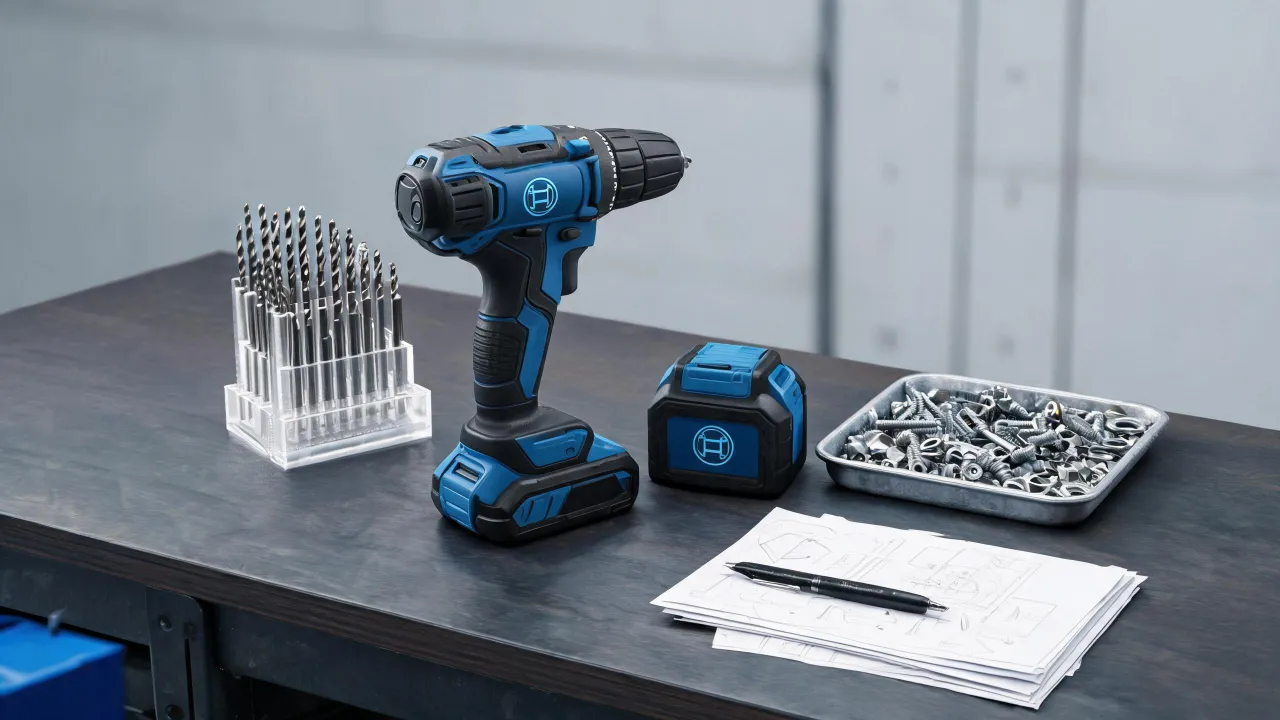
I’ve handled tool and equipment orders for a facilities maintenance team for 11 years. I’ve personally made and documented 14 significant mistakes, totaling roughly $8,700 in wasted budget. Now I maintain our team’s pre-purchase checklist to stop other people from repeating my errors. As of January 2025, my answer to the question when should I use an impact driver? is still the same. But the question I wish people asked first is different.
The Surface Problem: You’re Asking About the Tool, Not the Task
Let’s get the literal answer out of the way. Use an impact driver when you need high torque along the fastener’s axis—long deck screws, lag bolts, or self-drilling screws in dense material. Use a drill when you need clean holes or precise low-speed control. That’s the short version. It’s not the whole story.
The issue is that the question feels like a tool question. It’s actually a process question. And process questions are where I’ve lost the most money.
The Deeper Problem: We Buy Devices, Not Decisions
In my first year (2017), I ordered a new brushless drill for the crew. It was a good drill. The specs were better than the old one. Then I bought an impact driver from the same manufacturer, assuming “same platform” meant the same battery compatibility. Didn’t verify. Turned out the older 2.0 Ah packs couldn’t sustain the new motor under load. The drill sat. The driver sat. The crew went back to the corded tools, and every invoice I signed looked worse than the last.
Let me rephrase that: I bought badge compatibility instead of system compatibility.
I knew I should check the battery amp-hour ratings. But I thought, “what are the odds?” The odds caught up with me when the first task required eight hours of repeated driving. The 2.0 Ah packs died in about 40 minutes each. In the end, we needed six 4.0 Ah batteries to make the kit usable. That was $480 that shouldn’t have been a surprise.
The Spec Sheet Is a Starting Line, Not a Promise
The same pattern happened with nearly every order. Take the Bosch CS10 7-1/4" 15 amp circular saw. I almost didn’t pick it because a different saw in the same class had a lower list price. I was comparing tools the way you compare light bulbs—same socket, same wattage—while ignoring the base plate, the dust port, the blade included, and the cost of the blades we’d need for actual framing. The CS10 is a solid saw. It wasn’t the problem. My comparison method was.
When I finally stopped comparing prices and started comparing packages, the real cost of the other saw came into view. It needed a new blade for our material. Then it needed a dust bag. Then the base plate flexed on a long rip. The “savings” disappeared before the first return.
The Hidden Package Is the Foundation
This is where the pricing lesson comes in. I’ve learned to ask “what’s NOT included” before “what’s the price.” The vendor or brand that lists the full picture upfront—even if the total looks higher—usually costs less in the end. For tools, that means the full package: batteries, charger, bag, blades, service intervals.
I’ve learned to ask “what’s NOT included” before “what’s the price.”
It sounds like a purchasing saying. For me, it’s a scar.
What This Avoidance Cost Me: Three Receipts
I call this the “three receipts” section. Each one was avoidable.
Receipt One: The cantilever tool boxes
In September 2022, I ordered six cantilever tool box units. The spec sheet looked right: 18-gauge steel, full-extension trays, heavy latches. I checked the price per unit and didn’t check the internal tray depth. When the crew transferred their existing kits, their longest pry bars and deep bit cases didn’t fit. A cantilever tool box is only useful if the trays clear the tools you actually own. We kept two for compact kits and returned four. The freight and restocking fee ate the discount we had negotiated.
Receipt Two: The swivel head ratchets
I once ordered twelve swivel head ratchet units because the drive size and tooth count matched the request. I didn’t verify the handle length. The crew needed to reach a recessed bolt in a pump housing. The swivel head ratchet was too short for good leverage and too stiff to angle into the gap we had. Wrong tool for the access. $380 wasted plus a two-day delay. I want to say we transferred them to the automotive shop, but don’t quote me on that number—I might be misremembering exactly how many we repurposed.
Receipt Three: The heat pump that almost happened
The biggest miss wasn’t a tool. In Q1 2024, we needed to replace a system for one of our client buildings. I had a quote for a Bosch 15 SEER heat pump at a price that was hard to argue with. The upside was saving about $600 against the next proposal. The risk was ignoring the site conditions. I kept asking myself: is $600 worth potentially losing a client? I almost approved it anyway.
Before clicking “order,” I asked the installing contractor for the AHRI match. That’s the Air-Conditioning, Heating, and Refrigeration Institute’s official equipment-match directory (ahridirectory.org). I checked it in mid-January 2025. The brochure said 15 SEER. The matched system, with the existing indoor coil and air handler, was rated 14.2. Not a dealbreaker by itself. But the line set was undersized for the refrigerant run between the outdoor unit and the coil. That meant adapters, labor, and a pressure drop that would have reduced capacity on hot days. The avoided change order was about $3,200, though I might be misremembering the exact invoice.
That’s when I fully understood the pricing lesson. The quote for the Bosch heat pump was transparent about the unit price. It wasn’t transparent about the installation variables. Nobody was doing anything malicious. But the tool that shipped in the brochure wasn’t the system that shipped to the site.
The Checklist That Fixed It
Now, before any equipment order above $200, I run the list:
- Name the task, not the tool. What material, what fastener, what access, what duty cycle?
- Specify the complete package. Batteries, charger, bag, blades, bits, line sets, mounting kits—write every part down.
- Verify compatibility with what we already own. Same battery platform? Same voltage class? Same certified match?
- Ask “what’s not included?” Before asking “what’s the price?”
- Check physical fit. Tray depth, handle length, blade capacity, base plate size, line set length. Spec sheets don’t feel cramped.
That’s it. The list looks boring. It has saved us more than the original mistakes cost. Simple doesn’t mean easy—it means you stop making the same error twice.
So, When Should I Use an Impact Driver?
Use an impact driver when you need torque along the screw’s axis and the bit can handle the hammer action. Use a drill when you need hole precision, not fastener-driving muscle. But if you want the answer that prevents waste, it’s this: choose the impact driver after you’ve checked the screw size, the material density, the depth of the application, and the battery capacity you have on hand.
And when you apply that same question to the Bosch CS10 7-1/4" 15 amp circular saw, the cantilever tool box, the swivel head ratchet, and the Bosch 15 SEER heat pump, the tool isn’t the variable. The system is.
Stop buying tools. Start buying matches. The difference is the price of the invoice, and usually half the job.

Maren Jorgensen
Maren Jorgensen is an independent hand tool and torque applications analyst covering wrenches, pliers, screwdrivers, hammers, sockets, ratchets, hex keys, and tool sets. She applies ISO 6789-1 torque-tool conformance principles while examining jaw capacity, leverage, fastener engagement, torque range, accuracy, handle geometry, and material hardness. Her practical guides help tradespeople and procurement teams select suitable tools, plan controlled tightening, and compare durability without relying on brand reputation alone.