Why the Cheapest Bosch Quote Isn't Worth It: A Cost Controller's Take on Total Cost
It Started With a $14 Air Filter
A couple of years ago, I was comparing quotes for a workshop engine air filter for our service van fleet. One vendor offered a compatible filter for $14. A Bosch OEM filter (5076WS) was $26. The spreadsheet said buy the cheap one. My gut said something felt off.
I went with the Bosch filter anyway. It fit perfectly, and it has worked without a single issue since. The vendor who quoted the cheap one couldn't provide an ISO test report. That should have been a red flag from the start.
That experience changed how I buy everything now, from screwdrivers to pumps. And it's not because I'm a tool snob. It's because I've spent six years tracking invoices, auditing $180,000 in cumulative spending, and watching well-intentioned purchases blow up in our faces.
If you're a maintenance manager or a procurement person, you've probably felt this tension: the budget says buy cheap, but the work says buy right. Let me walk you through what I learned, because the problem isn't the price tag. It's everything hiding around it.
The Price Trap
It's tempting to think you can just compare unit prices. But identical specs from different vendors can result in wildly different outcomes. That $14 filter had the same dimensions on paper. But it didn't have a real seal. It would have let unfiltered air into the engine, slowly wearing it down. The cost of that? A $2,800 engine repair. If I'd bought the cheap filter, the 50-cent savings would have cost us thousands.
Most buyers focus on per-unit pricing and completely miss setup fees, revision costs, and shipping that can add 30-50% to the total. The question everyone asks is "What's your best price?" The question they should ask is "What's included in that price?"
What's Actually in the Spec Sheet?
Let me give you a few examples from actual purchase orders, not hypotheticals.
Screwdrivers: The Numbers Lie
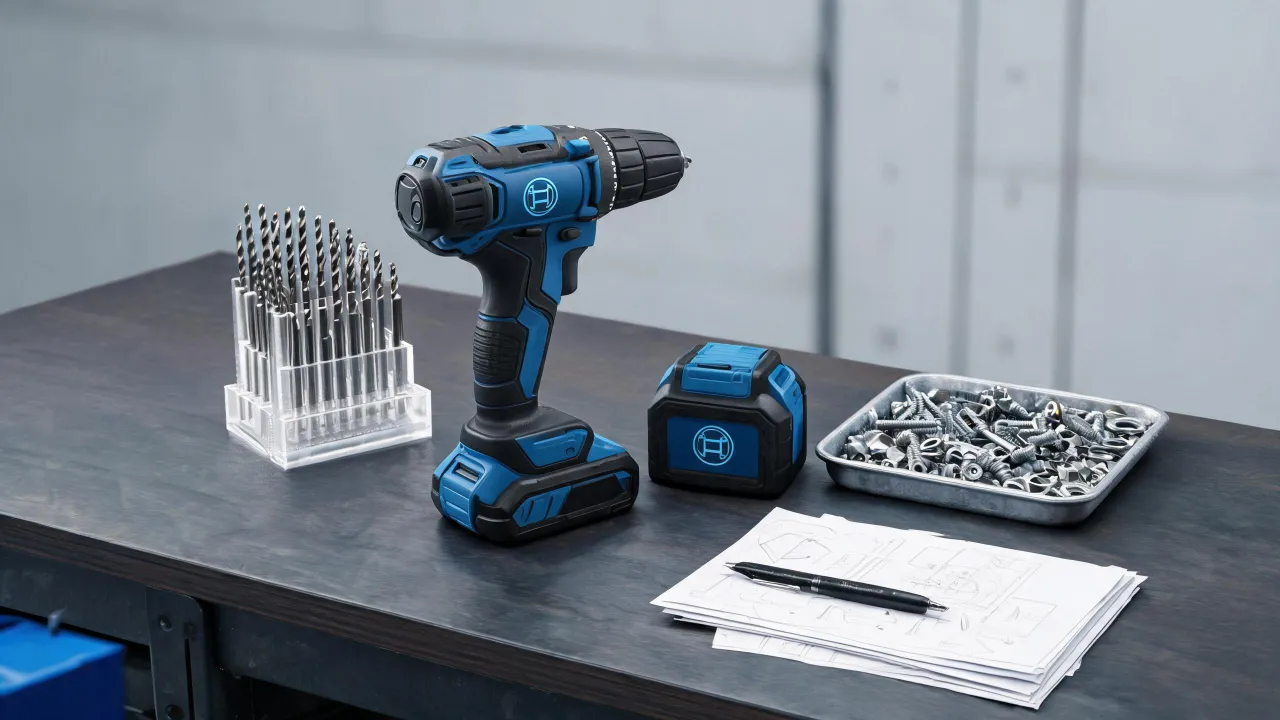
The screwdriver Bosch IXO 7 6039 is a cordless screwdriver. When we ordered a batch for our assembly team, we compared it to a cheaper model with a slightly higher torque rating. The numbers said the cheaper one was stronger. But the torque curve was inconsistent—it would stall at odd angles. The Bosch IXO 7, despite a lower peak number, delivered torque predictably at low speed. Our team flagged the difference within a week. The cheaper model went back and we ordered the Bosch units. That decision cost 12% more per unit but saved us at least 30 minutes of rework per workstation per day.
Ratchets: Flexibility Costs Money, or Saves It
A flex head ratchet wrench set is one of those things you don't think about until you're reaching into an engine bay with your arm bent at two angles. The premium set cost $180. The budget set was $78. I almost went with the budget set until I realized the flex head mechanism had no locking detent. It would flop around while you're trying to break a bolt loose. That's not an inconvenience—that's a dropped wrench, a skinned knuckle, and an hourly rate of $55 plus the cost of the bolt you strip. We spent the $180. It's been three years and the set still feels as tight as day one.
Door Locks: The Hidden Installation Cost
When we were outfitting a hotel corridor, the architect specified a passage pocket door lock 2101. The lock itself was $45. The "equivalent" lock was $28. But the cheap version didn't include the strike plate properly aligned for a 4-7/8" o.c. installation—which meant our carpenter had to measure and cut new slots. That added $120 in labor per door. The $17 savings became a $120 nightmare. The Bosch unit we used (the 2101) slid right in. Do the math.
The Pump Question Everyone Forgets
One of the most common questions I get from our site team is: "Can a submersible pump be fully submerged?" And the answer is not always. Some pumps are designed for partial submersion only, with the motor housing staying above the water line. If you drop one of those into a deep sump, you'll cook the motor in hours.
On a recent job, a vendor quoted a cheaper pump. I asked for the IP rating and the maximum submersion depth. They had to go back to the manufacturer. The pump didn't have a proper seal rating for continuous full submersion. Had we bought it, the first heavy rain would have flooded the pit and cost us a $900 emergency replacement. The Bosch pump we ended up with had the rating printed right on the housing. That's transparency.
What This Costs You When You Ignore It
Why does this matter? Because the price of a tool isn't the price. It's the price plus the risk. When I audited our 2023 spending, I found that 14% of our tool budget went to replacing items that failed early because we didn't check duty cycle ratings, IP codes, or torque consistency. That's $11,200 out of an $80,000 budget—gone.
And it's not just the replacement cost. Think about downtime. A mechanic who reaches for a wrench and has it slip off a bolt doesn't just lose the wrench. They lose the hour it takes to fix the stripped thread. A technician who uses a screwdriver that stalls on half the screws spends an extra ten minutes per assembly. Multiply that by 30 assemblies a week and it's five hours of lost productivity—every single week.
In Q2 2024, we compared quotes for a rush order of flex head ratchet sets. Vendor A charged $240 each and could ship in 3 days. Vendor B charged $190 each but needed 2 weeks. The numbers said Vendor B was cheaper. My gut said we couldn't afford the wait, so we paid the rush fee with Vendor A. The order arrived on time and worked perfectly. Later, I found out Vendor B's "2 weeks" was actually "maybe 3 weeks, and the tool had a known defect rate." That rush fee was worth it—and it was only 12% of the total, not the 20% I'd built into my forecast.
Per FTC guidelines (ftc.gov), advertising claims about durability and torque must be substantiated. So when a vendor says "industrial-grade" or "never breaks," ask for the test data. If they can't provide it, that's a sign. A brand like Bosch publishes spec sheets, ISO certifications, and even output curves. That transparency doesn't cost extra—it saves you from surprises.
How I Changed Our Process
After that air filter incident, I built a simple Total Cost of Ownership (TCO) spreadsheet. It has four lines:
- Base price per unit
- Shipping and handling (based on USPS rates, usps.com, as of January 2025)
- Installation or setup cost (including labor time)
- Expected lifespan in your specific environment
That last line is the one people skip. A $90 screwdriver that lasts 5 years costs $18 per year. A $50 screwdriver that dies after 6 months costs $100 per year. The math isn't close.
We also changed our procurement policy to require quotes from 3 vendors minimum—but not just any 3. We now ask each vendor for an itemized list of what's included and what's not. The "always get three quotes" advice ignores the fact that if you don't compare the same spec sheet, you're comparing apples to backhoes.
I'll admit, even with this system, I still have moments of doubt. After ordering a full pallet of Bosch IXO 7 screwdrivers, I second-guessed myself: could I have negotiated a better bulk discount? The two-week lead time felt endless. Then the units arrived, the team ran a quick test, and one of the techs said, "These actually feel like real tools." I relaxed.
The Bottom Line
I'm not saying every cheap tool is a bad tool. And I'm definitely not saying every expensive brand is worth it. What I'm saying is that the cheapest quote is rarely the cheapest total cost.
Ask the question you're afraid to ask: "What's not included in this price?" If the vendor can answer clearly, you can make an informed decision. If they avoid the question, you've learned something important.
For my team, Bosch has become a baseline—not because they're the only standard, but because they're open about what they include and what the limits are. I know a Bosch pump will have its submersion rating printed on the label. I know a Bosch flex head ratchet will hold its detent. I know a Bosch IXO 7 will have a consistent torque curve. That predictability is worth more than the $14 I saved on an air filter years ago.
Is the premium option always worth it? Sometimes. Depends on context. But if you can't see all the pieces of the price, you can't make that call at all. That's it.

Maren Jorgensen
Maren Jorgensen is an independent hand tool and torque applications analyst covering wrenches, pliers, screwdrivers, hammers, sockets, ratchets, hex keys, and tool sets. She applies ISO 6789-1 torque-tool conformance principles while examining jaw capacity, leverage, fastener engagement, torque range, accuracy, handle geometry, and material hardness. Her practical guides help tradespeople and procurement teams select suitable tools, plan controlled tightening, and compare durability without relying on brand reputation alone.