A 36-Hour Rush Job: What It Taught Me About Bosch Tools and When to Say No
The Call
Friday, October 11, 2024, 2:03 p.m. I was standing in the equipment yard with a clipboard when the phone buzzed. Randy, the maintenance lead at a dairy plant on Barlow Road, didn't say hello. “The case packer gearmotor is walking on its base. We've got a window until Monday at 6:00 a.m. Can you get us a rotary hammer, a 7440 torque screwdriver, and somebody who can weld?”
I coordinate rush equipment orders for industrial customers. In eight years I've handled over 200 of them, from overnight deliveries to full weekend rescues, so the urgency part doesn't shake me. What made this one different was that third request. I already knew the answer was no.
We're a tool supplier. We are not a welding contractor. Saying that out loud was harder than it should have been.
The Mistake Before the Real Work
The failure itself was pretty common. A gearmotor had been vibrating on its base for months. The stiffener bracket under it developed a cracked weld, and the old anchor bolts in the concrete pad were no longer holding anything. A maintenance tech tried the fast fix on Friday morning: cordless drill, masonry bit, and a lot of leaning on the handle. By the time Randy called, the drill was smoking and the bit had done more heating than cutting.
That's how it always goes with the wrong tool. It looks like a drill problem, so someone grabs a drill. But drilling into a structural concrete pad needs a rotary hammer, not a drill with a masonry bit. A rotary hammer hits the bit while it turns; the SDS-plus system lets the bit slide and strike instead of forcing you to push it. If you've ever searched for a bosch hammer 11236vs, you know exactly what I'm talking about. That model family, the 1-inch Bulldog class, has been the backup plan in more maintenance shops than I can count. It's not delicate, it doesn't need a battery platform, and it does the one job it was built for: making holes in concrete.
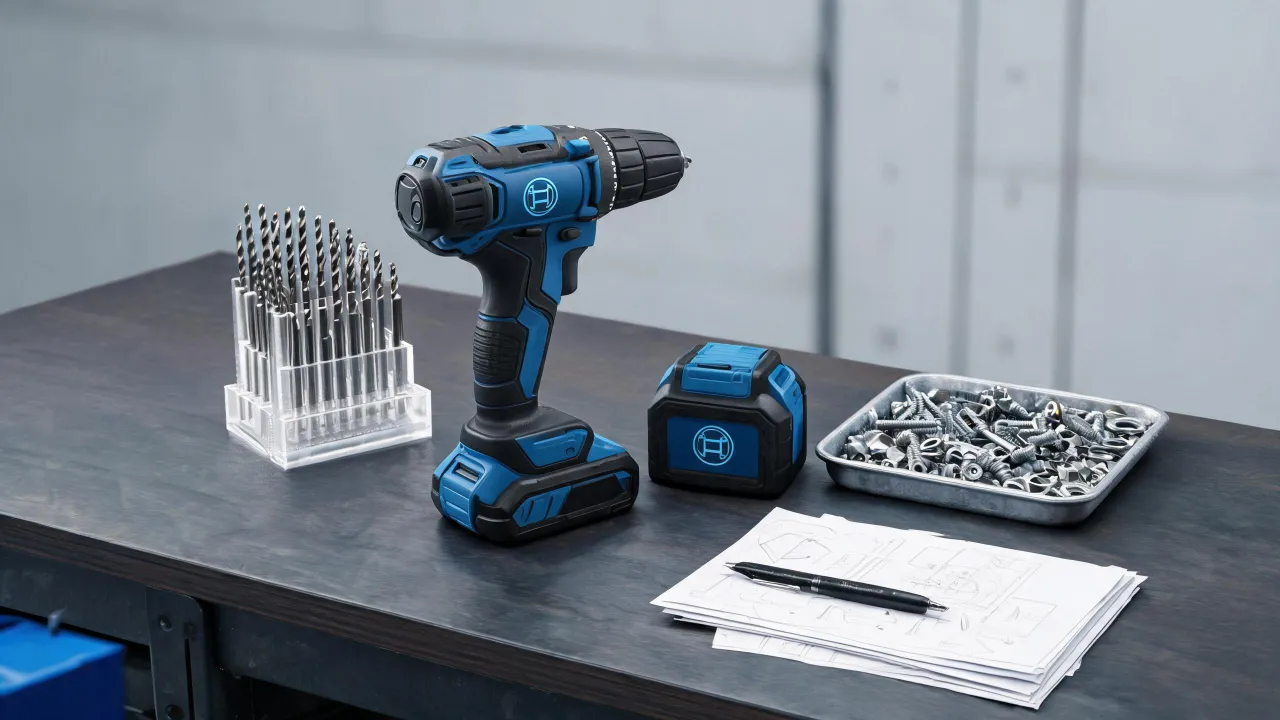
Everybody wants the newest Bosch cordless tools in their kit. We have them in our vans too, mostly 18V drill/drivers and an impact for assembly work. But when the concrete starts going, I still grab the dusty grey hammer with the scratched housing.
The Welder Question
While the crew was pulling the gearmotor, Randy's plant manager walked over. He has that look managers get when the production schedule is slipping away. “So your guy can weld the bracket, right?”
I said no.
I'd love to tell you I delivered that perfectly, with some veteran wisdom. I didn't. It came out as “we don't really... no, that's not our side.” What I meant was: welding a bracket that will carry a vibrating gearmotor isn't about laying down a bead that looks good. It's about joint prep, material, and knowing what could happen if the weld doesn't hold. I've seen a technician weld a trailer fender. That doesn't qualify anyone for a failure-critical repair in a plant running 24 hours a day.
This is the boundary I bring up whenever customers ask about “one-stop” service. If a supplier claims they do everything, at least one of those things is being done by somebody who isn't really good at it. Randy had his phone out during this conversation, scrolling through “welders for sale near me.” A $600 machine and a guy who “welded in high school” felt cheaper than a Saturday call-out. But owning a welder doesn't make you a welder. Bottom line: a machine is not a skill. For a safety-critical steel weld, I want someone who works to a standard like AWS D1.1 and can prove it.
The silence lasted about twenty seconds before Randy's manager said, “Then find me somebody who can.” That was the right answer. And the mobile welding shop we called had the bracket fixed by 6:45 the next morning.
Saturday Belongs to the Right Tool
By 7:00 a.m. Saturday, we had the base cleaned, the bracket re-welded, and the anchor layout marked. This is where the Bosch hammer finally got to work.
Eight holes, 5/8-inch, roughly four inches deep. The first two took a little longer because we were getting the line and level right. After that, it was just the hammer doing what it does. A tool that pulls its weight makes a coordinator look good, and the Bosch 11236vs class of hammer is the definition of that.
Once the anchors were set, the rest of the morning was assembly: brackets, guards, sensor mounts, covers. For that, the blue Bosch cordless tools came out. We carried two drill/drivers and an impact, and I think we used three batteries before lunch. Nothing dramatic. That's the point. When the specific task is driving screws and small fasteners, a cordless tool is the right call. When you can swap batteries instead of hunting for an outlet, the job gets faster in small increments that add up.
In the middle of all this, the plant electrician came over holding a cabinet door screw. “What size are cabinet hardware screws?” he asked, meaning the screws that hold pulls and latches on the plant's steel storage cabinets. It was such a small question compared to everything else that weekend.
Here's the answer we found out: most U.S.-made cabinet hardware uses #8-32 machine screws, usually an inch or shorter. European-made hardware is typically M4 x 0.7. They look close enough that you can strip a thread if you force the wrong one. A thread pitch gauge is faster than guessing.
The more serious fastener question involved the drive coupling. Randy asked if we'd brought the 7440 torque screwdriver. We had. Honestly, the model number matters less than the torque range and the calibration sticker. A torque screwdriver without a current calibration is just an overpriced handle. The one we carry had been certified six months earlier, and as of January 2025, our policy is still the same: if it doesn't meet ISO 6789, it doesn't touch a torque-critical fastener.
What I'd Still Do Differently
The line started on schedule Monday morning. The gearmotor wasn't walking. The bracket wasn't flexing. In hindsight, I should have asked Randy to send photos in that first phone call instead of relying on a description. We would have staged the right tools earlier and avoided some of the back-and-forth.
But the bigger lesson stayed with me. In a rush order, customers expect you to say yes to everything. They expect “we can do it all.” The truth is, a supplier who knows their limits is usually the one who gets the job done.
I still second-guess the moment I told the plant manager no. We could have charged for that weld, and nobody would have known until it failed. But I'd rather lose a sale on Monday than lose a customer at 2:00 a.m. when the bracket breaks.
“The vendor who says, 'this isn't our strength—here's who does it better,' earns trust for everything else.”
That's what I want every new coordinator to understand. It's not about having every tool. It's about having the right tool, the right calibration, and the honesty to call someone who knows more than you do.

Maren Jorgensen
Maren Jorgensen is an independent hand tool and torque applications analyst covering wrenches, pliers, screwdrivers, hammers, sockets, ratchets, hex keys, and tool sets. She applies ISO 6789-1 torque-tool conformance principles while examining jaw capacity, leverage, fastener engagement, torque range, accuracy, handle geometry, and material hardness. Her practical guides help tradespeople and procurement teams select suitable tools, plan controlled tightening, and compare durability without relying on brand reputation alone.