Your Bosch Tool Didn't Just Die: It Was Telling You for Months
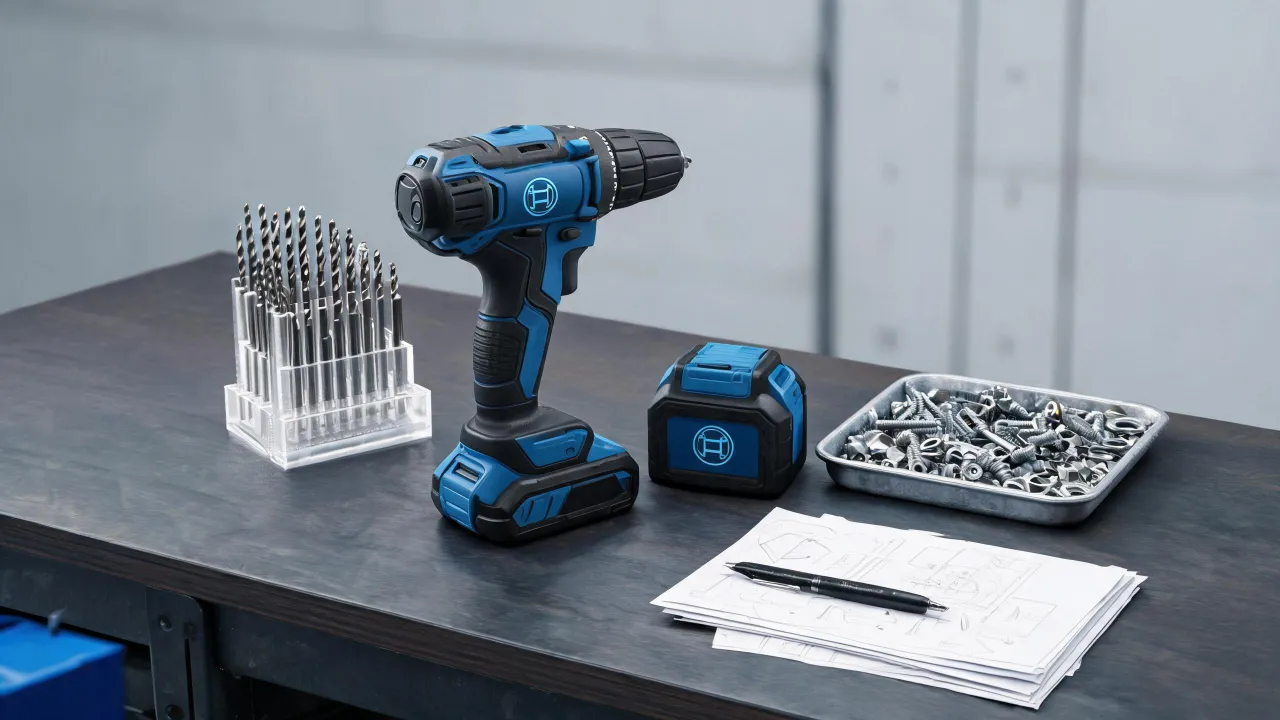
Thursday, 4:47 PM. The phone rings and I already know how the next ten minutes are going to go. A contractor on the other end has a crew standing around on a job site, a dead Bosch tool in his hand, and a deadline that can't move. He doesn't call to ask why it broke. He calls to ask how fast I can make it unbroken.
In my role coordinating rush repairs for professional tools, I've taken a lot of those calls. I've coordinated something like 220 emergency repairs over the last five years — maybe a bit less, I'd have to check the system. What stopped surprising me isn't how many tools fail. It's how many of those sudden failures were months in the making.
Because the tool didn't really fail that afternoon. That afternoon was just when the failure became impossible to ignore.
The part that fails is rarely the root cause
When a machine comes in with a dead motor or a gearbox full of metal dust, everybody wants the same answer: it was a bad part. And sure, defective parts exist. But they aren't the majority of what I see. The part that failed is usually the end of a chain of events that started somewhere else — and that chain almost always begins with one of three patterns.
The first pattern is using a tool past what it was designed for, often without realizing it. Compact bolt cutters are the clearest example I know. They look tough, and they are. A good pair will slice through a padlock shackle or a piece of rebar like it's nothing, so crews keep using them for everything: overhead work, tight spots, that awkward cut a few times a day. That's exactly what they're for. The problem starts when a compact cutter becomes the shop's main cutter for every task. The compact design trades leverage for portability, and when you push that boundary all day, the pivot wears, the blades go out of alignment, and the tool starts spreading instead of cutting. It doesn't usually fail on the day you overloaded it. It fails three weeks later, on a Thursday, with no warning.
The second pattern is dull consumables. An 18V lawn mower is a great teacher here. Every spring, customers bring one in and say the motor has lost power. What they're actually describing is a blade that hasn't been sharpened in a year and an underside packed with grass. From the operator's seat, a dull blade feels exactly like a weak motor: the mower labors, the battery drains faster than it should, and eventually the overload protection kicks in. With a battery mower, that's not just an inconvenience. Every time the motor pulls excess current, it runs hotter than the engineers intended. Do that for a season and a maintenance problem has quietly turned into an expensive repair.
The third pattern is the one that took me longest to understand, because it shows up in a completely different product category. Ask a diesel specialist about the Bosch CP3 pump — the high-pressure fuel pump used in a lot of pickup trucks and commercial engines — and you'll hear a similar story. The CP3 is genuinely tough hardware. Most early failures trace back to what went into it upstream: water in the fuel, contaminated diesel, a filter that should have been changed long ago. The pump fails at the end of the chain, but it was never the real problem.
Power tools are no different. The upstream is just less obvious — it's the workload, the maintenance, the storage, the little signs everyone walked past. Once I started looking for the upstream cause instead of just the broken component, the same equipment started making a lot more sense.
What an emergency actually costs
Here's what people don't want to hear when they're standing in front of me at 5:00 PM with a dead tool: the repair bill isn't the expensive part.
The expensive part is what led to that moment. Most shops, including mine, charge more for speed. Based on our internal numbers across hundreds of rush jobs, an urgent repair runs roughly 40 to 70 percent more than the same repair done on a normal schedule. You're paying overtime, you're paying to prioritize your job over someone else's, and if a part has to be shipped overnight, you're paying for that too. But that premium is small compared to a crew standing around, a missed deadline, or a client who stops calling.
In March 2024, a landscaping company called us 36 hours before their crew was due to start on a commercial property they'd just won. Their 18V lawn mower kept stopping mid-yard, and the battery seemed to drain instantly. They were serious about buying a new mower — they'd already looked up models online. When we put the mower on the bench, the diagnosis took about four minutes. The blade had never been sharpened, and the deck was caked with enough compacted grass to choke the airflow. We sharpened the blade, cleaned the underside, and the mower ran like it was new. The fix wasn't a motor, a battery, or a new machine. It was a dull blade and twenty minutes of attention.
I still think about that call. The crew was maybe an hour away from spending serious money on a replacement they didn't need — and if they'd bought it, they would have repeated the same mistake with the new machine.
I have mixed feelings about my side of this business. Part of me is grateful for rush repairs; they're what keep a repair shop alive. Another part hates them, because I know most of those emergencies could have been scheduled repairs. What reconciles those two parts is being straight with customers about what's actually urgent and what's just been ignored for too long.
Three habits that prevent most emergency repairs
Match the tool to the real workload. If your crew uses compact bolt cutters for an occasional cut in a tight space, great. If they're reaching for the same pair every day to cut fence posts or bundles of rebar, buy something closer to a production cutter. The extra cost is cheaper than one mid-job failure. The same logic applies to every tool in your trailer.
Take care of the business end. Blades, chains, and bits do more than cut; they protect the motor. For an 18V lawn mower, the highest-value skill you can learn is how to sharpen lawn mower blades with an angle grinder. It's a 20-minute job: remove the battery, take off the blade, and clean the grass packed under the deck. Clamp the blade in a vise and run a flap disc along the existing bevel — follow the angle that's already there, don't invent a new one. Take light passes and let the steel cool; if it turns blue, you've overheated it and softened the edge. Sharpen both ends with the same number of passes, then check the balance by hanging the blade on a nail or screwdriver shank — the side that drops needs more work. Reinstall it, torque it to spec, and you're done. Do that a few times a season, and most of the reasons an 18V mower ends up in a repair shop simply disappear.
Bring it in before the drama starts. When a tool starts making noise, losing runtime, or vibrating in a way it didn't last month, that's the warning — not the failure. For anything beyond blades and basic maintenance, use Bosch service and repairs rather than letting a small problem become a big one; the Bosch website has a locator for authorized centers. A professional repair with genuine parts on a premium tool is almost always cheaper than replacing it, and it's certainly cheaper than the emergency version of the same repair.
The crews I see with the fewest emergencies aren't the ones with the newest equipment. They're the ones that treat maintenance as part of production, not an interruption to it. Efficiency is the whole game in this industry, and the most efficient shop isn't the one with the fastest emergency fix — it's the one that never needed it in the first place.
So next time a tool dies at 4:47 PM, don't ask why it broke today. Ask what it was telling you three weeks ago.

Maren Jorgensen
Maren Jorgensen is an independent hand tool and torque applications analyst covering wrenches, pliers, screwdrivers, hammers, sockets, ratchets, hex keys, and tool sets. She applies ISO 6789-1 torque-tool conformance principles while examining jaw capacity, leverage, fastener engagement, torque range, accuracy, handle geometry, and material hardness. Her practical guides help tradespeople and procurement teams select suitable tools, plan controlled tightening, and compare durability without relying on brand reputation alone.