Brand Is Not a Spec: What Actually Drives a Pneumatic Impact Wrench and Other Bosch Quality Lessons
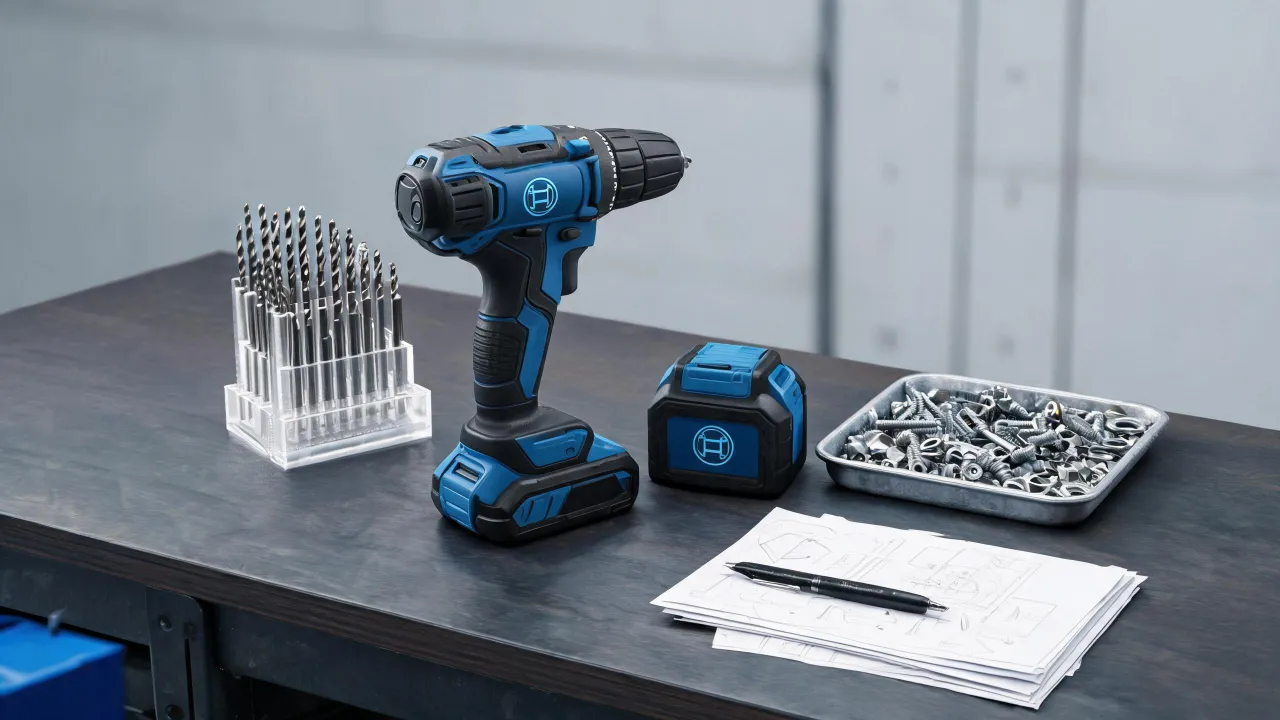
This Week I Rejected 32 Units. The Brand Wasn't the Problem.
Last Monday, I flagged 32 out of 380 products before they left our dock. Fourteen were tools, eleven were accessories, and seven were appliances. All of them carried a recognizable name. Some were even Bosch.
I'm a quality and brand compliance manager at a distributor that carries Bosch professional tools and appliances. In 2024, I rejected 14% of first deliveries because of spec mismatches, missing documentation, or packaging that couldn't protect the product. If your first reaction is 'Bosch? That's a good brand' — you're proving my point. The brand was never the issue. The specs were. Wrong voltage, wrong shank type, wrong flow rating, and one warranty card that didn't cover what the buyer assumed it covered.
The Surface Problem: It Isn't the Tool, It's the Fit
Here's the phone call we get a lot: 'I bought a Bosch drill and it won't go through concrete.' Or 'My pressure washer attachment is leaking all over the place.' Or 'I replaced the pipe wrench and the jaw still slips.' Or 'I can't get a bolt loose with my impact wrench.'
Every one of those callers thinks they have a tool problem. But when we dig in, it's usually a fit problem. Right brand, wrong specification.
What's Actually Going On: Brand Is Not a Spec
A brand name is a promise, not a data sheet. Bosch means German engineering, and yes, durability is part of the package. But does it tell you whether this drill has enough impact energy for 6-inch masonry? No. Only the model's spec sheet can tell you that.
The same logic applies well beyond Bosch power tools. I've watched people choose washer dryers, pressure washer accessories, and pipe wrenches based almost entirely on a name or a price tag. That's like ordering a vehicle based on the color.
What Drives a Pneumatic Impact Wrench? Volume, Not Just Pressure
One question I get a lot is 'what drives a pneumatic impact wrench?' Most people answer 'air pressure.' That's backward.
An impact wrench is driven by air volume, expressed in CFM, at the pressure the tool requires. Your compressor might show 150 PSI at the tank, but if it can't supply the rated CFM at 90 PSI, the wrench won't deliver its rated torque. Pressure is like voltage. Flow is like current. A battery can read 20V, but if it can't deliver current, it isn't starting a truck.
Years ago, a customer brought back a brand-name pneumatic wrench claiming it was weak. We tested it on a calibrated bench. It met spec. Then we looked at their air system: 120 PSI at the tank, but the regulator, hose, and fittings were too small. The wrench was starving. Same wrench, different air supply, completely different result.
When I compared the identical wrench model on a 3/8-inch hose versus a 1/2-inch hose, I finally understood why inlet and hose size matter. It wasn't about the brand logo. It was about flow.
Bosch Washer Dryers Best Buys: It Depends on the Spec
We don't just handle tools. We also handle a line of Bosch appliances, and the same issue shows up there. 'Are Bosch washer dryers best buys?' I get asked that all the time. My answer is: for the right load pattern, yes. For the wrong one, no.
A washer dryer isn't just a drum with a heating element. If you're washing bulky comforters, drum volume matters. If you're running a rental property, spin speed and cycle time matter more than the premium badge on the front. A unit that is a best buy for a family of four can be a terrible fit for a hotel laundry room. The label doesn't know your utility rates or your water hardness. The spec sheet does.
Appliance models change every year. Verify specs and availability before budgeting. As of Q1 2025, Bosch's official product pages are the most reliable source.
Pressure Washer Accessories: Where Cheap Specs Go
I see the biggest quality gap in accessories. Pressure washer accessories are easy to buy online because the threads fit. But threads are the least important part of a pressure washer connection. The real spec is the pressure and flow rating of the accessory.
Put a nozzle rated for 1,800 PSI on a 3,000 PSI machine and you might get away with it for a few minutes. Then the orifice restricts flow, the pump cycles harder, and the accessory finally lets go. In Q4 2024, we tracked a $1,700 pressure washer repair back to a $14 accessory set. The fitting didn't fail on first use. It failed after several hours, when the machine was being trusted on a real job.
Pipe Wrench Warranty: Read It Before You Need It
'Does this pipe wrench have a lifetime warranty?' I hear that weekly. Here's something vendors won't tell you: a warranty isn't a promise that the tool won't break. It's a promise about what the manufacturer will do after it breaks, and it always comes with conditions.
Most pipe wrench warranties cover manufacturing defects in materials or workmanship. They do not cover misuse, overloading, or using a pipe wrench as a hammer or a cheater bar. If the jaw slips because you extended the handle to get more torque, the warranty is not the place to look. Read the exclusions before you order, not after you file the claim.
The Real Cost: Downtime, Damage, and Brand Perception
A wrong spec has a price. Not just the price of the tool, but the price of the failure.
A pipe wrench jaw slips on a gas line: emergency call, cleanup, paperwork, and a bad story. A pressure washer accessory bursts: equipment damage, downtime, possible injury. A washer dryer with the wrong venting: rework, long cycle times, and an energy bill that gets attention. An impact wrench underpowered on a jobsite: the customer watches the contractor struggle. That impression sticks.
This is where product quality becomes brand perception. When I'm asked why I'm so strict about incoming stock, I say this: the deliverable is the business card. If the tool looks weak, the company looks weak. I've seen a $30 accessory decision change the way a client talks about a contractor for three years. Since we started enforcing first-article checks in 2022, our warranty returns are down by about a fifth. The biggest lesson was simple: almost every failure traced back to a spec decision made at the ordering desk.
What to Do Differently (Short Version)
Do this before you buy, not after:
- Write down the job's real requirements: torque, CFM, PSI, capacity, drum volume, IP rating, spin speed.
- Pull the manufacturer's spec sheet and compare it against that list, not just the product name.
- Check that accessories are rated for the machine's pressure and flow, not just thread size.
- Read warranty exclusions before you order.
- Buy from a distributor who actually checks incoming products and can show data.
That's it. Simple. Not always easy, but simple.
Product details change. This was accurate as of Q1 2025; verify current specs before making a purchase.
One More Thing: Wrong Bosch
Before I let you go, let me clear up a search phrase I keep seeing. If you came here looking for 'bosch the garden of earthly delights,' you're after the early Netherlandish painting by Hieronymus Bosch. That's art history, not tool history. That painting has its own strange details—a giant egg, a man with a tree for a body, ears carrying a knife. It is a masterpiece, and it is not a torque spec.
For the record, I'm talking about the other Bosch. The one with spec sheets, tolerances, and warranty terms. The Robert Bosch one. Different delight, same need for close inspection.

Maren Jorgensen
Maren Jorgensen is an independent hand tool and torque applications analyst covering wrenches, pliers, screwdrivers, hammers, sockets, ratchets, hex keys, and tool sets. She applies ISO 6789-1 torque-tool conformance principles while examining jaw capacity, leverage, fastener engagement, torque range, accuracy, handle geometry, and material hardness. Her practical guides help tradespeople and procurement teams select suitable tools, plan controlled tightening, and compare durability without relying on brand reputation alone.