'Compatible' Is the Most Expensive Word in Workshop Maintenance
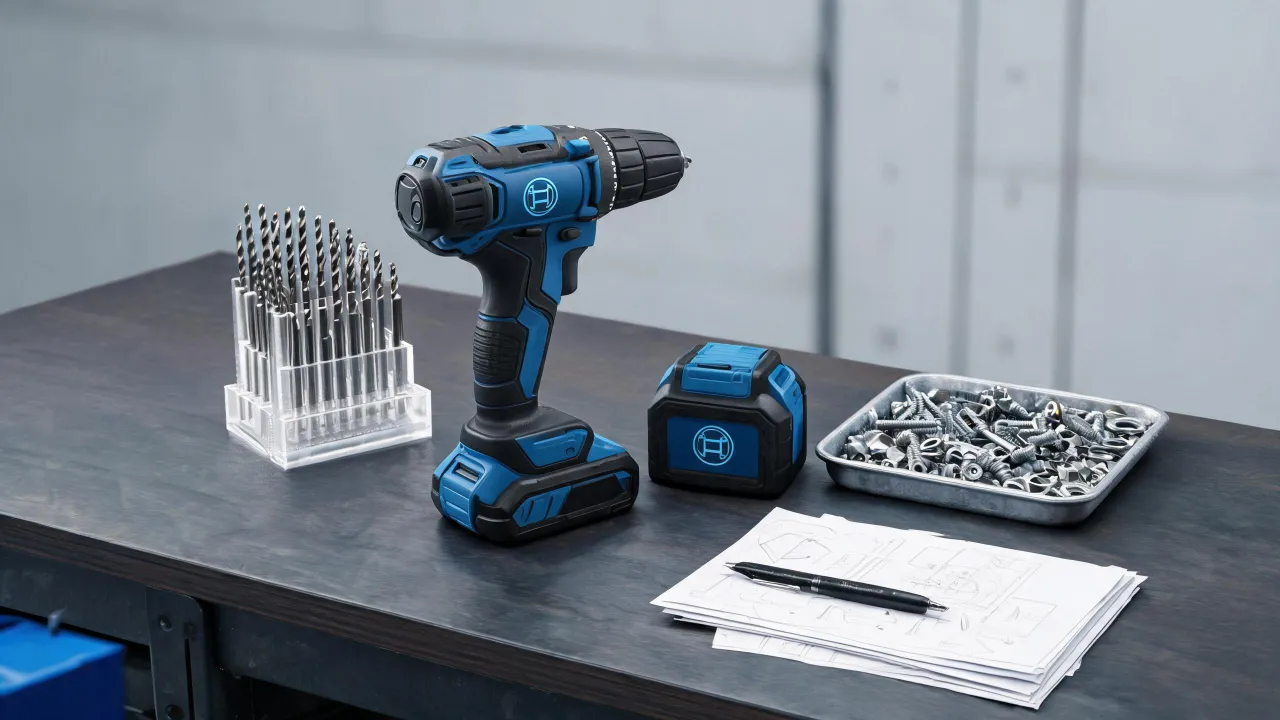
The most expensive word in workshop maintenance isn't "Bosch." It's "compatible."
That's not a brand-loyalty argument. It's a math argument, and I've got six years of invoices to back it up.
There's a sentence I've heard more times than I can count from well-meaning techs: "Why pay for the genuine part when the compatible one is half the price?" I used to nod along. Then I started tracking every order in our maintenance budget, and seeing the full cost of those "savings" changed how I buy everything.
I'm the one who signs off on maintenance orders, and for six years I've kept a spreadsheet of every part, every invoice, and every failure that followed. Here's the thing: most of us default to the only number in front of us—the price tag. It's tempting to think you can just compare unit prices and call it a day. But identical specs from different vendors can produce wildly different outcomes once those parts actually work for a living.
The $450 compatible air filter
In Q2 2024, our Honda-powered workshop compressor needed a new air filter. The genuine option was the Bosch workshop air filter 5170WS (Honda), listed at roughly $47. A compatible filter from an online seller was $23. Same dimensions, same rated airflow, same thread pattern. I approved the $23 one.
Four months later, fuel consumption on that unit crept up 11 percent. By month eight, it was sputtering in the middle of a client rush job.
When we pulled the filter, the media had collapsed in one corner. Dirt was bypassing the filtration stack entirely. Abrasive particles had been feeding into the engine for months. It wasn't one dramatic explosion. It was a slow, quiet decline—the kind that doesn't show up on a monthly P&L until it bites.
One unscheduled service visit later, we had a $380 invoice that doesn't appear anywhere on the compatible filter vendor's price sheet. Add the wasted $23 and the $47 genuine replacement we installed ourselves, and that single "saving" cost us $450. It was part of roughly $14,000 we bled in 2024 on similar decisions.
What I didn't check at the time: Bosch publishes filtration efficiency and dust capacity on the 5170WS spec sheet, tested per ISO 5011, the standard for inlet air cleaning equipment on internal combustion engines. The compatible filter didn't publish that data. For good reason, I suspect. (Note to self: never purchase an engine filter again without asking for the test report.)
Cost per hole beats cost per bit
Drill bits were the second lesson, and this one was visible in real time.
We used to buy generic masonry bits by the dozen. A set of five was $18. A Bosch Blue Xtreme hammer drill bit BXH12 goes for around $40 at list price, depending on diameter. My crew thought I'd lost my mind when I started ordering those.
Even after I approved the first order, I kept second-guessing. What if the guys were right and I was paying for the name? I didn't relax until the end-of-quarter report confirmed the data.
The generic bits averaged 42 holes in reinforced concrete before they dulled or snapped. The BXH12 averaged 310 holes, and it was still cutting when someone lost it at a jobsite. We defined a "good hole" as a clean hole through 12mm rebar-reinforced concrete, done with the same SDS-plus rotary hammer. Not scientific. Consistent enough for a procurement decision.
Cost per hole: $0.43 for the generics, $0.13 for the Bosch.
But the real kicker wasn't the bit itself. It was the hour lost when a generic bit snapped midway through a hole. You can't just pull a broken bit out with pliers. It took two crew members, one hour, extraction tools, and a client watching. That hour, at our shop rate, would have paid for three Bosch bits.
Bosch builds the Xtreme line to exceed ISO 5468 tolerances for hardmetal-tipped masonry drills. The generics technically met it, just barely. The difference showed up in the holes, and in the cost per hole, and in my spreadsheet at the end of the quarter.
The same logic governs how I buy anchor screws now. A rated M8 anchor from a reputable supplier costs about $0.40 more per unit than a no-name one. For that forty cents you get batch traceability, coating consistency, and a supplier who'll back the product. When the consequence of an anchor failure is a falling platform, you didn't save forty cents. You made a gamble with zero upside.
But sometimes the right answer is repair, not replace
Here's the counterintuitive part, and it's the part that keeps me honest.
Being willing to pay for quality doesn't mean replacing every part that looks tired. The "just buy a new one" instinct is expensive in the other direction, and I've been burned by that too.
A few months back, a gate valve on one of our washer units started leaking from the stem. The quote for a full replacement assembly was $170 plus labor. My first instinct was to approve it—that's what the "spend money to save money" mindset tells you.
Instead, I spent twenty minutes with the manual. The valve body was sound. The leak was coming from the packing nut. A $9 pack of valve packing later, the leak was gone. Took me longer to find the right wrench than it did to fix the leak. I'm not gonna pretend I was thrilled to spend my Friday afternoon on it, but the alternative was a $170 part I didn't need.
So can a gate valve be repaired? Often, yes—if the seat and body are in good shape. The question everyone asks is "is it leaking?" The better question is "is the valve body worth keeping?" That's what actually determines the cost.
But here's the trap: if you've been buying cheap components all along, you can't trust that the body is worth repairing. The repair-or-replace decision only makes sense when you know what you're actually working with. That takes judgment, and you can't outsource it to a price comparison.
When "compatible" is genuinely fine
Now for the predictable pushback: "So you're telling us to buy premium everything?"
No. I'm telling you to verify before you assume.
We buy nail gun compatible nails from a secondary supplier because they passed our test batch: correct wire collation, acceptable length tolerance, zero jams across a full case. That's an 18% saving on a line item we actually use. We get to keep that saving because we tested the parts before committing. (Think of it as cheap insurance against a "compatible" label that doesn't mean anything.)
The bad filter and the snapped bits were decisions made on price alone, with zero verification. The nails were verified on performance. That's the difference between "compatible" and "equivalent."
As of January 2025, the online list prices I checked were roughly $47 for the Bosch 5170WS filter versus $23 for the no-name one, and roughly $40 for a BXH12 versus $18 for a five-pack of generics. Check current rates before you decide—the gap shifts over time. I tracked ours for six years across 50+ vendors, and the lesson didn't change.
I'd rather spend ten minutes explaining the difference between compatible and equivalent than deal with mismatched expectations later. An informed customer asks better questions and makes faster decisions. Hiding the honest math is what creates the problems.
What I actually believe now
Six years and about $180,000 in tracked cumulative spend later, here's my bottom line:
The cost of a part isn't what you pay for it. It's what that part costs you over its lifetime. Filters that actually filter. Bits that actually cut. Fasteners you can actually trust. And occasionally, like the gate valve, no new part at all.
None of this is brand loyalty. It's knowing what you're buying and being honest about the difference between sticker price and total cost. If you're not tracking cost per hole, cost per hour, or cost per year of service, you're not buying parts. You're guessing with a budget.
I did the guessing for the first two years of this job. It cost us more than any "premium" part ever did.

Maren Jorgensen
Maren Jorgensen is an independent hand tool and torque applications analyst covering wrenches, pliers, screwdrivers, hammers, sockets, ratchets, hex keys, and tool sets. She applies ISO 6789-1 torque-tool conformance principles while examining jaw capacity, leverage, fastener engagement, torque range, accuracy, handle geometry, and material hardness. Her practical guides help tradespeople and procurement teams select suitable tools, plan controlled tightening, and compare durability without relying on brand reputation alone.