Buying Power Tools for Your Facilities Team: A Scenario-Based Guide
I've been managing procurement for a 180-person company for about six years now. Roughly $350K annually across all categories. A chunk of that goes to tools for our facilities team.
I used to struggle with this. Not finding tools—that part is easy. The problem was that no matter what I bought, someone was unhappy. The maintenance lead wanted more power. Finance wanted lower costs. My VP asked why we had three different brands of the same thing.
It took me a while to figure out the real issue: there's no single right answer for tool procurement, because the right answer depends entirely on how you're going to use it.
Start by Identifying Your Scenario
Before I buy anything now, I ask three questions:
- How often will this tool actually get used?
- Who's using it—professionals or occasional helpers?
- What happens if it's not available?
That third question matters most. Some tools are just inconvenient to be without. Others will stop a project dead. The procurement logic for those two situations is completely different.
Scenario A: Low Frequency, Budget-Conscious
Typical situation: Used a few times a year. Light maintenance, hanging shelves, assembling furniture.
Approach: Don't buy the cheapest option. But don't go premium either.
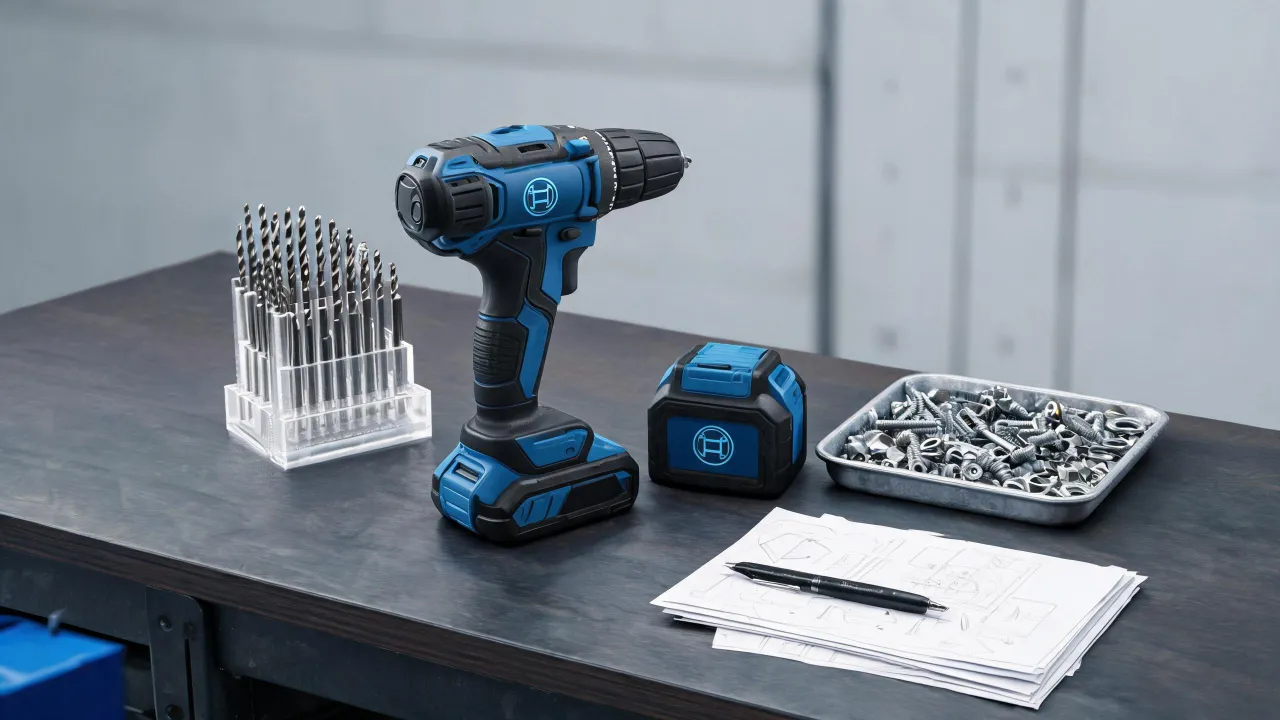
For this scenario, the Bosch GBM 6 RE drill is what I usually order. It's one of the more basic models in Bosch's professional line—600 watts, variable speed, forward and reverse. For general office maintenance, it's more than enough.
Why did I pick it? Honestly, price was the initial factor. Back in 2022, we tried a no-name brand that cost about $40. The chuck started slipping within three months. Swapped it for the Bosch, and it's still running today. When I ran the numbers, the "expensive" one was actually cheaper.
One more thing worth adding in this scenario: a universal socket set.
Maintenance teams constantly run into bolts in weird sizes. A decent universal socket set saves a lot of frustration. You don't need a professional-grade set—just one that covers common metric and SAE sizes.
Counterintuitive tip for this scenario: Don't buy the cheapest thing just because it's "only used occasionally." Low frequency means you have less confidence in the tool's reliability, because it sits there and you never know when it might fail. A stable, well-reviewed basic model beats a bargain that makes you nervous every time you pick it up.
Scenario B: High Frequency, Professional Team
Typical situation: The facilities team uses it almost daily. Or the tools directly support revenue-generating projects.
Approach: Professional-grade tools pay for themselves in this scenario.
Our maintenance lead has been using a Bosch jigsaw for over three years now. Before that, he had a cheaper unit. The main issue was blade drift on curved cuts—edges came out uneven and needed rework. After switching, his rework rate dropped noticeably.
The math is straightforward: if the tool is being used to generate work, the cost of inefficiency and rework far exceeds the price difference between consumer and professional grades.
One thing people overlook: consumables matter as much as the tool.
Take composite decking cuts. The blade requirements for WPC (wood-plastic composite) are different from regular lumber. Too few teeth and the edges chip. Too many teeth and you get slow cuts and burning. We standardized on fine-tooth carbide blades, and the difference in cut quality and material waste was significant.
The material you save by using the right blade can easily exceed the cost difference between blade types.
Scenario C: Time-Critical, Deadline-Driven
Typical situation: There's a hard deadline. If the tool doesn't arrive on time, the project stalls.
Approach: Pay the premium for certainty.
Last November, we had an office renovation that required partial partition work in a conference room before Friday. The maintenance team discovered the air compressor nail gun fittings were the wrong size and needed an adapter. The local hardware store had it, but at nearly double the online price.
I told them to buy it locally.
Saving $30 online would've meant waiting three more days. What's the cost of a one-day delay? Crew labor, equipment rental, cascading schedule impacts. That adds up to far more than the price difference.
This is what I call the "time certainty premium"—you're not paying for speed, you're paying for the guarantee that it arrives when you need it.
I remember this clearly. Back in 2021, we tried to save money by ordering some fittings online. The vendor said "probably three days." It took eight. That was embarrassing—I'd already reported progress to my VP, and the whole thing was stuck on a $50 part.
Since then, anything tied to a project milestone gets prioritized by delivery certainty, not unit price.
How to Tell Which Scenario You're In
A simple diagnostic:
- If the tool gets used less than once a month → Scenario A approach.
- If the team uses it daily, or it directly supports billable work → Scenario B approach.
- If there's a specific delivery date and the tool being late causes delay → Scenario C approach.
Most organizations have all three scenarios running simultaneously. The key is not to apply one logic across the board. On the same purchase order, daily-use items can follow Scenario A thinking, core tools follow Scenario B, and time-sensitive parts follow Scenario C.
One Last Thing
I've watched organizations swing to extremes here. Either everything gets bought at the lowest price—resulting in constant replacements and higher total cost—or everything gets bought premium, blowing the budget and triggering a conversation with finance.
The value of scenario-based thinking is that every dollar is justifiable. If finance asks, you can explain: this tool is low-frequency, so I optimized for value; this one is used daily, so I chose professional-grade to reduce rework; this part was urgent, so I paid for delivery certainty to protect the project timeline.
That explanation usually holds up.

Rajiv Menon
Rajiv Menon is an independent rigging and lifting hardware analyst covering shackles, chain hoists, hooks, turnbuckles, wire-rope clips, and lifting attachments. He applies ISO 2415:2022 shackle requirements while evaluating working load limit, grade, proof load, design factor, pin fit, sling angle, reeving, brake behavior, identification, inspection, and temperature range. His safety-led guides help lifting teams and purchasers select compatible hardware, interpret markings, establish inspection criteria, and avoid side loading or undocumented substitutions.