Bosch Impact Driver vs. Zyklop Ratchet vs. Appliance Repairs: A Maintenance Buyer's Comparison
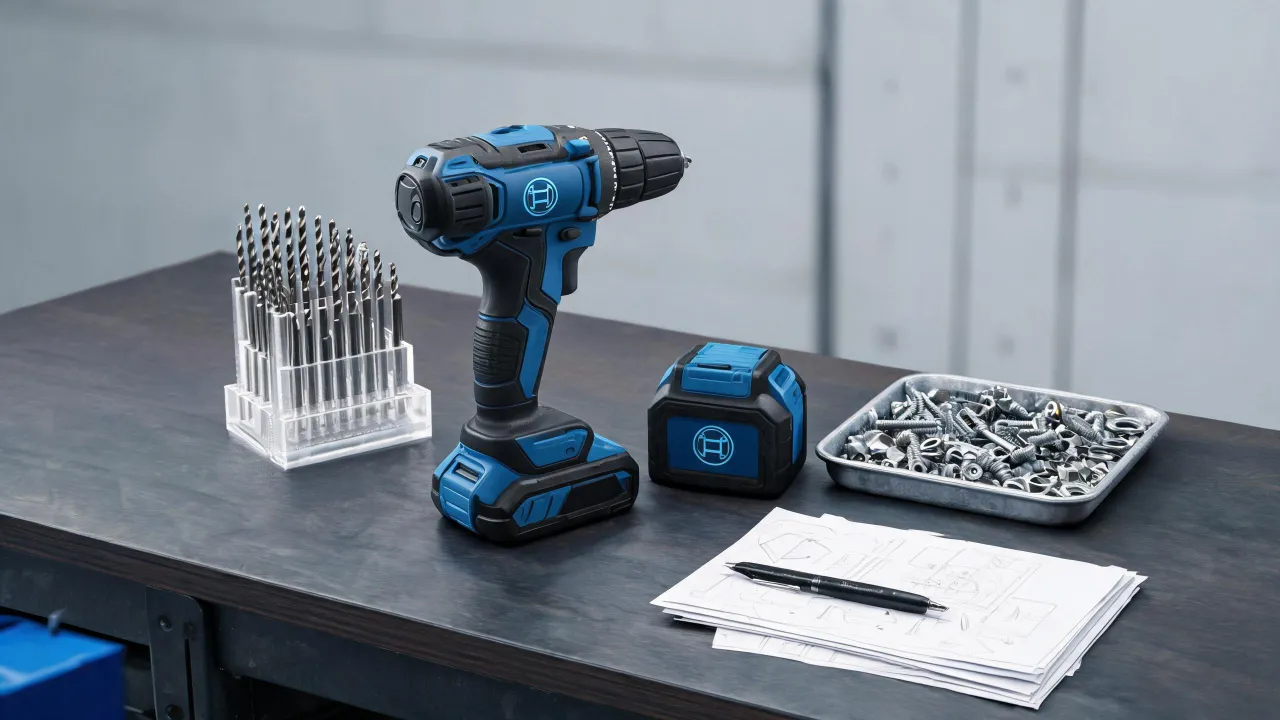
I've been handling MRO and facility tool orders for 11 years. I've personally made and documented seven significant mistakes, totaling roughly $18,400 in wasted budget. Now I maintain our team's pre-purchase checklist. This is the comparison I wish I'd had before I mixed up three very different decisions: Bosch power tools, Bosch hand tools, and Bosch appliance repairs.
Here's the framework I use now:
- Dimension 1: Bosch impact driver vs. drill/driver—and how to fit drill bit into impact driver without wrecking the bit or the chuck.
- Dimension 2: Bosch Zyklop 3/8 ratchet vs. ratchet pliers—two tools that look adjacent in a catalog but solve different problems.
- Dimension 3: Bosch dishwasher repairs vs. Bosch Vision 500 Series washer service—when repair is a no-brainer, and when replacement is the cheaper path.
To be fair, not every buyer needs all three. But facility teams usually do, and that's where the mistakes happen.
Dimension 1: Bosch Impact Driver vs. Drill/Driver
The impact driver is the tool most people buy first. It's compact, it drives screws fast, and it feels like it can do everything. It can't.
Bosch impact drivers use a 1/4-inch hex quick-change chuck. That's the key spec. If you're searching for how to fit drill bit into impact driver, the answer is: use a drill bit with a 1/4-inch hex shank, or use a 1/4-inch hex-to-keyless chuck adapter. Pull the collar back, insert the hex shank until it clicks, release the collar, then tug the bit to confirm it's locked.
Do not force a standard round-shank drill bit into the hex chuck. It will wobble, slip, or get stuck. I learned that the expensive way.
In 2019, I assumed an impact driver could replace a drill/driver for a facility punch list. Didn't verify the chuck type. I ordered 40 standard round-shank drill bits, and none of them would seat properly. That mistake cost about $320 in returned bits, shipping, and a day of delay.
So which wins? For driving screws and running hex-shank accessories, the impact driver wins. For drilling holes, especially precise ones, the drill/driver wins. That's the counterintuitive part: the adapter that lets you use round bits in an impact driver adds length and runout. It's fine for a quick hole in softwood. It's not fine for cabinet hardware or metal brackets.
Bottom line: Buy the impact driver for fastening. Buy a drill/driver if you drill more than once a week. If you only need occasional drilling, keep a hex-shank bit set and a keyless chuck adapter in the case. Verify the chuck type in the current Bosch manual before ordering bits—Bosch Professional support pages list the accepted shank type, and product specs can change by model year.
Dimension 2: Bosch Zyklop 3/8 Ratchet vs. Ratchet Pliers
This comparison is less obvious than it sounds. The Bosch Zyklop 3/8 ratchet and ratchet pliers both have 'ratchet' in the name. In practice, they're not competing for the same job.
The Zyklop 3/8 ratchet is a controlled torque tool. It's for sockets, hex bits, and fasteners you can reach. You use it for planned maintenance: pump covers, machine guards, conveyor brackets, and anything with a known fastener size. The ratcheting mechanism lets you work in tight spots without resetting the wrench every quarter turn.
Ratchet pliers are a grip-and-hold tool. They're for clamping, pulling, and rescuing rounded or awkward parts. They are not a torque tool. If you use ratchet pliers as a substitute for the correct socket, you will round heads. That's not a theory. It's a receipt.
The numbers said ratchet pliers were the cheaper way to equip three maintenance carts. My gut said we'd regret it. I went with the spreadsheet for two carts and kept the Zyklop on the third. Within a month, the pliers carts had rounded hex bolts on a pump cover. That error cost $890 in rework plus a one-week delay. The Zyklop cart had zero rounded fasteners.
Take this with a grain of salt: I'm not 100% sure every rounded bolt would have been prevented by the Zyklop. Some were already seized. But the pattern was pretty clear. The right socket and ratchet apply force to the flats. Pliers apply force to the corners. Corners lose.
Bottom line: The Zyklop 3/8 ratchet is the primary maintenance tool. Ratchet pliers are a backup for extraction, holding, and improvisation. If your team does scheduled maintenance, buy the ratchet first. If your team fights rust and rounded hardware, add ratchet pliers second. Don't let a lower unit price pull you into using the wrong tool for the job.
Dimension 3: Bosch Dishwasher Repairs vs. Bosch Vision 500 Series Washer Service
Now the appliance side. This is where B2B buyers often get burned because the decision feels emotional: repair the machine you know, or replace it with something new. The better comparison is repair vs. replace, using the specific Bosch model as the anchor.
For Bosch dishwasher repairs, the first step is not calling a technician. It's finding the model number, usually the E-Nr, and the FD serial number. Bosch Home Appliances support recommends having both before ordering parts or booking service. As of May 2026, verify the current support process at Bosch Home Appliances because part availability changes by model and production run.
For a Bosch Vision 500 Series washer, the same rule applies, but the stakes are higher. Vision 500 Series washers have model variants that may share a name but not share internal parts. I assumed '500 Series' meant interchangeable parts. It doesn't. That assumption cost us $450 in a non-returnable control board and a three-day production delay.
I still kick myself for not verifying the E-Nr before approving that part. If I'd spent five minutes with the rating plate, we'd have ordered the right board the first time.
Here's the decision rule I use now:
- Repair if: the appliance is under 8 years old, the repair estimate is less than 50% of replacement cost, the part is in stock, and the failure is isolated—door latch, drain pump, fill valve, or a single control board.
- Replace if: the washer has bearing or drum failure, the dishwasher has repeated leaks from multiple points, the control board is obsolete, or the repair cost is above 50% of replacement plus installation and downtime.
To be fair, replacement has hidden costs too: delivery, installation, disposal, and staff time. A $600 repair can be cheaper than a $900 replacement once you add all that. But a $600 repair on a 12-year-old Bosch Vision 500 Series washer with bearing noise is usually throwing money at a machine that's already telling you it's done.
Bottom line: Bosch dishwasher repairs are often worth it when the problem is a single accessible part and the model is recent. Bosch Vision 500 Series washer service is worth it when the fault is not structural. If you're on the fence, get the model and serial, ask for a parts-and-labor estimate in writing, and compare it to total replacement cost—not just the sticker price.
Selection Guide: What I'd Do in Each Scenario
If you need one compact tool for screws and occasional hex-shank drilling: Bosch impact driver with hex-shank bits and a keyless chuck adapter. Just don't expect round bits to fit without help.
If you drill holes as part of every job: Bosch drill/driver. The impact driver is not a precision drill. That's the mistake I keep seeing in new technicians' carts.
If you run scheduled maintenance: Bosch Zyklop 3/8 ratchet. It's a game-changer for tight spaces and repeat fastener work. Add ratchet pliers for extraction and holding, not as a replacement.
If a Bosch dishwasher is leaking: check the E-Nr and FD number, then decide repair vs. replace. If a Bosch Vision 500 Series washer is thumping or leaking from the drum, get a service quote before assuming a board swap will fix it.
The 12-point checklist I created after my third mistake has saved us an estimated $8,000 in potential rework. It's boring. It works. Five minutes of verification beats five days of correction.
One last thing: verify current specs, parts, and pricing directly with Bosch or an authorized service provider. Tool chucks, accessory compatibility, and appliance part numbers can change. I'm not 100% sure your exact model matches my examples, and you shouldn't be either until you check the label.

Helena Duarte
Helena Duarte is an independent pipe, valve, and pump applications analyst covering fittings, ball valves, gate valves, check valves, butterfly valves, flanges, hose clamps, centrifugal pumps, sump pumps, and submersible pumps. She uses ISO 5208 pressure-testing concepts and ISO 9906 pump acceptance methods while comparing pressure class, seat leakage, Cv, head, flow, efficiency, solids passage, seal materials, and installation orientation. Her guides help specifiers and maintenance teams match fluid-handling components to service conditions and acceptance criteria.