My First Year Buying Tools: 4 Mistakes, $2,400 Wasted, and the Checklist I Still Use
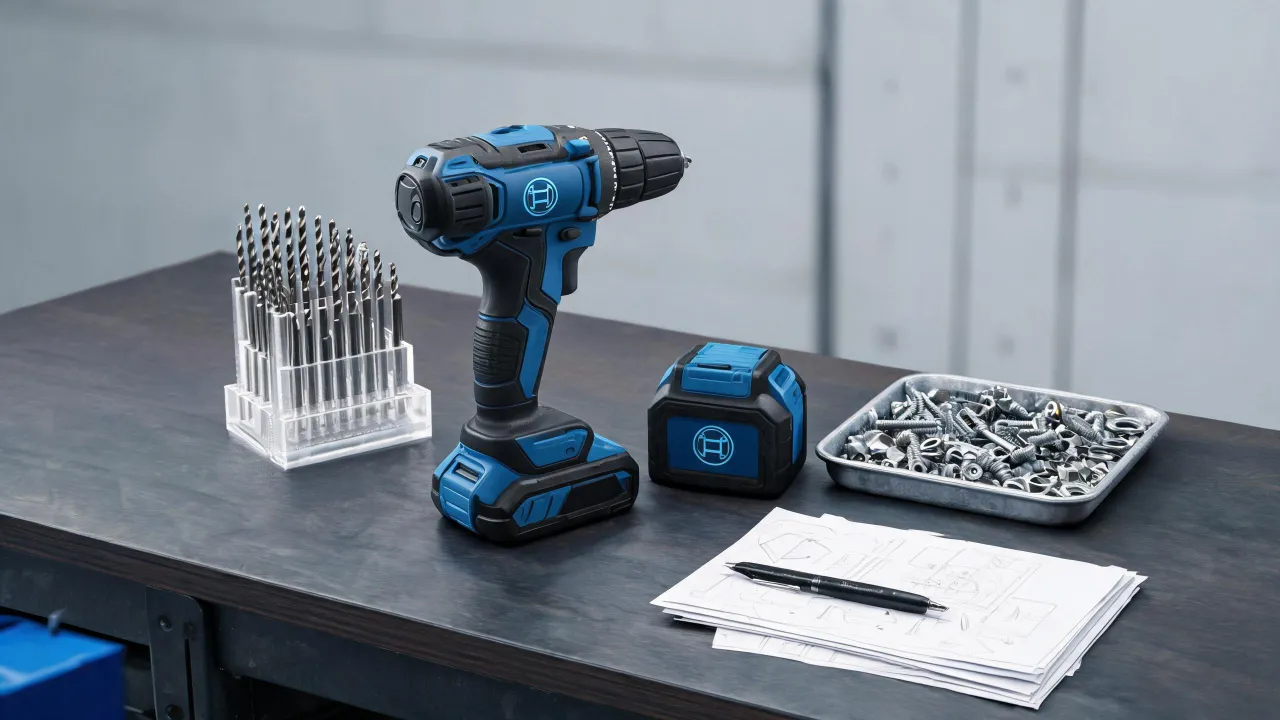
My First Year Buying Tools: 4 Mistakes, $2,400 Wasted, and the Checklist I Still Use
I've been handling tool procurement orders for a mid-size general contractor for 4 years. In my first year, I personally made (and documented) 4 significant mistakes, totaling roughly $2,400 in wasted budget. Now I maintain our team's tool purchase checklist to prevent others from repeating my errors.
This isn't a story about how great I am at my job now. It's about how badly I messed up when I started — and what finally changed.
September 2021: The Confidence Before the Fall
I took over procurement for three active job sites: a retail renovation, an apartment complex repair contract, and a warehouse addition. My previous experience? Office supplies and IT equipment. Tools were a different world.
My predecessor's advice was simple: "Just buy what the crews ask for."
Sounded easy. It wasn't.
Mistake #1: Thinking a "Bosch Tool Kit" Covers Everything
My first week, I ordered three Bosch tool kits — one for each site. It felt efficient. One brand, one purchase, done.
Two weeks later, a foreman stopped me in the parking lot. "We need a hammer drill for the concrete anchors."
"Isn't that in the kit?"
He just looked at me. The Bosch tool kit I'd ordered was a solid general-purpose set — drills, drivers, a few hand tools. But it didn't include a rotary hammer, and it definitely didn't include anything for breaking concrete.
I ended up ordering a separate rotary hammer the next day. That one mistake delayed the anchor installation by 36 hours. The foreman was understanding, but I could tell he was mentally adding me to a list of people who "don't really get it."
Mistake #2: The Jack Hammer 3000 Order
This one still stings.
We needed a demolition hammer for a concrete slab removal. I searched online, found a listing for a "jack hammer 3000" at a decent price, and hit purchase. Didn't check the specs. Didn't ask the crew what they actually needed. Just saw "3000" and assumed bigger number = better tool.
When it arrived, our lead operator took one look and said, "This runs on a different voltage than our setup. We can't use it."
I spent $600 on adapters and another week of back-and-forth trying to make it work. It never did. We ended up renting a compatible unit for $480 on top of what I'd already spent.
Lesson learned the hard way: always match the tool to your existing power infrastructure. Bigger isn't better if it doesn't plug into anything you own.
Mistake #3: The 56-Inch Tool Box That Fit Nowhere
With tools scattered across three trucks, I decided we needed organization. I ordered three 56-inch tool boxes — one per site. They arrived on a Friday afternoon.
Monday morning, our crew tried to load them into the service trucks. They didn't fit. Not even close. The boxes were too wide for the truck bed enclosures and too tall for the storage racks.
We ended up using two of them as stationary workbenches at the shop (which, honestly, we still do). The third one sat in the warehouse for three months until I sold it at a loss.
I now measure every storage solution before ordering. Not the product dimensions — the actual space where it's supposed to go. I use a tape measure, not a spec sheet.
Mistake #4: The Bosch Compact Washer and Dryer (Wrong Product Line Entirely)
This one's a bit different, but it taught me the most.
One of our job sites had a small on-site office setup, and the crew lead mentioned they needed a washer and dryer for work clothes — concrete dust and caulk residue were getting ground into everything.
I found a Bosch compact washer and dryer unit at what looked like a great price and ordered it. Bosch makes good stuff, right? German engineering and all that.
What I didn't realize: that unit was designed for residential use — a few loads a week, not a construction crew washing six sets of work clothes every single day. It broke down within the first month. The repair tech told me it was a "light-duty consumer model." Not commercial. Not built for our volume.
We ended up switching to a commercial-grade laundry setup from a local supplier. The Bosch compact unit found a new home in a foreman's garage. He still uses it for his family's laundry, which is what it was meant for.
The lesson: brand reputation doesn't transfer across product categories. Bosch makes excellent tools. That doesn't mean their residential appliances are built for commercial job site use. Same brand name, totally different engineering standards.
February 2022: The Moment Everything Changed
This is the one that actually scared me.
We had a new hire — young guy, eager to work. He picked up an angle grinder and asked our shop foreman, "How do I put a blade on this?"
The foreman showed him quickly and moved on. Forty-five minutes later, I heard a sound I'll never forget: the whine of a grinder turning at full speed, followed by a sharp crack.
The new kid had installed the blade backward. It shattered mid-cut. Fragments flew across the shop. One piece hit the safety shield and bounced off. Luckily, nobody got hurt. But if he hadn't been wearing the face shield — which, thankfully, our shop policy requires — he could've lost an eye.
I spent that night thinking: I've been ordering tools, but I wasn't making sure anyone knew how to use them. I wasn't training. I wasn't checking.
So I started writing down everything I wish I'd known from day one. That list became our team's tool procurement checklist.
The Checklist I Still Use (and Why It Works)
I keep it in a shared document. Every tool purchase, no exceptions:
- Function first. What job does this tool actually need to do? (Not "can it drill?" but "can it drill 3/4-inch holes in concrete for 6 hours a day?")
- Power compatibility. Does it match our existing power setup? (Voltage, battery platform, compressor requirements — all checked, every time.)
- Storage reality. Where will this live? I take physical measurements of the truck bed, the shop shelf, the site cabinet. Every single time.
- Training requirement. Who will operate this? Do they need a safety certification? Have they used this type of tool before? (If the answer to any of those is "I don't know," I stop the purchase.)
- Commercial vs. residential. Is this rated for daily, heavy-duty use? Or is it a light-duty model that happens to share a brand name with the heavy stuff?
We've caught 47 potential errors using this checklist in the past 18 months. Everything from missing voltage compatibility to accidentally ordering a residential-grade piece of equipment for a commercial site.
What I Know Now That I Didn't Then
The tool industry has evolved — batteries last longer, motors are more efficient, smart tools are making their way into everyday job sites. But the fundamentals haven't changed.
A tool is only as good as its fit for the job. And that fit depends on compatibility, training, and honest assessment of what the work actually requires.
What was best practice in 2020 may not apply in 2025. But the discipline of checking before ordering? That never goes out of style.
I still make mistakes. But now I document them. And I share the checklist.
That's the part I wish someone had told me on day one.

Omar Vukovic
Omar Vukovic is an independent garden and outdoor power equipment analyst covering pruning shears, loppers, hedge shears, lawn mowers, tillers, chainsaws, and related cutting systems. He applies IEC 62841-4 safety principles while comparing blade geometry, chain speed, bar length, cutting capacity, battery runtime, vibration, kickback controls, noise, ergonomics, and maintenance access. His practical articles help landscape teams and buyers choose equipment for vegetation, workload, operator control, serviceability, and seasonal operating conditions.