Which Bosch Tools Does Your Team Actually Need? A Buying Guide for Three Scenarios
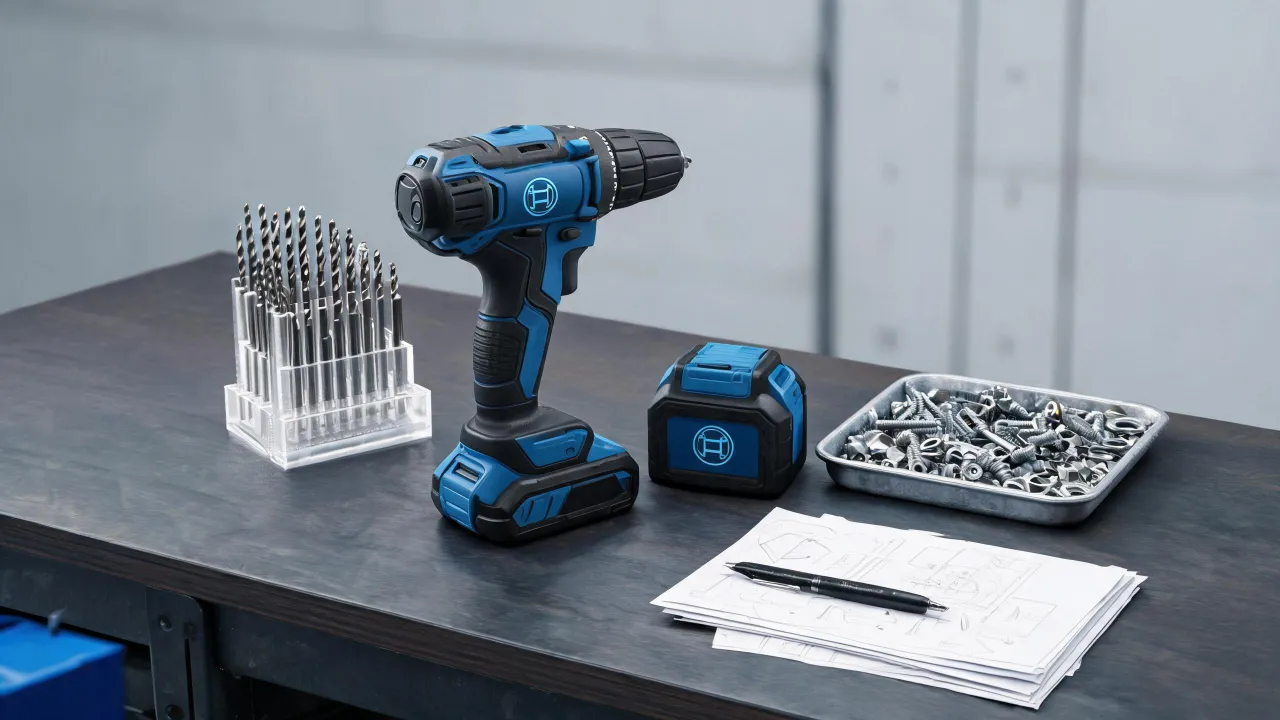
Ask five contractors which Bosch rotary hammer they’d recommend, and you’ll get five different answers. That’s not indecision—it’s because no two crews use tools the same way. I’ve been in charge of purchasing for our company since February 2020, and after roughly 200 orders, here’s what I’ve landed on: the right Bosch setup depends entirely on who’s using it, how often, and for what.
So instead of giving you a single “best Bosch tools for business” list, I’m going to walk you through the three team profiles I keep running into, and what I’d actually order for each. If none of them fits perfectly, the quick check at the end will help you find your starting point.
Three team profiles, one practical framework
- Scenario A — The light maintenance crew. One to three people. Facility repairs, furniture assembly, small jobs. Tools get used in bursts, not all day.
- Scenario B — The full-time on-site crew. Five or more people. Demolition, concrete drilling, heavy fastening. Tools get dropped, covered in dust, and borrowed without permission.
- Scenario C — The growing mixed team. Some veterans, some new hires. You’re expanding, and the temptation is to buy professional-grade everything before the projects can justify it.
My experience is built on general maintenance, light construction, and facility work. If you’re in a niche trade, this framework still helps, but take the specifics with a grain of salt.
Scenario A: The light maintenance crew
If you’re buying for a small team that handles facility repairs and basic installs, you have two risks: spending too much, and buying tools that sit in a case for months.
Start with a standard socket set 13 pc. It covers the 8mm to 19mm range, which handles the majority of fasteners on everyday equipment and furniture. I want to say our 13-piece set ran around $30, but don’t quote me on that—I don’t track unit pricing the way I track total order cost. What I can tell you: that one set has covered about 80% of our socket needs. You do not need a 300-piece mechanics set with deep sockets you’ll touch twice a year.
For power, a Bosch cordless drill/driver with two batteries covers most maintenance work. And here’s the part that might surprise you: skip the rotary hammer. Even the Bosch Bulldog—which I own and have nothing bad to say about—is overkill for a team that drills into concrete a few times a month. I learned this the hard way. When I took over purchasing, I ordered a heavier rotary hammer for our small crew, and watched it gather dust in the cabinet for the better part of a year. The occasional masonry job can just as easily be rented, or handled with a basic hammer drill.
One test I run before ordering: if nobody on the team knows how to put a blade on an angle grinder without looking it up, the tools aren’t being run hard enough to justify the pro-grade line. Get the standard models. They’re reliable, spare parts are easy to find, and you’ll come out ahead on budget.
Scenario B: The crew that lives on the job site
Now we’re talking about a different animal. Your team is onsite daily, drilling anchors into concrete, mounting fixtures, cutting and grinding for hours. The workload is different (think anchor bolts, rebar, and daily demo). This is where Bosch’s professional line genuinely earns its price tag.
A rotary hammer becomes a necessity here, not a nice-to-have. I’m not an engineer, so I can’t speak to SDS-plus chuck design or vibration damping. What I can tell you from a procurement perspective: the corded Bulldog series has been a reliable choice for us, and our technicians like them. If your crew stays near power, corded saves you the cost of extra batteries. If they’re moving between floors or outdoor sites, pay the premium for cordless—it pays itself back within a quarter.
Job-site durability is part of the value too. Bosch professional tools are serviceable; when something breaks, parts are available and repairs don’t turn into a weeks-long saga. That matters for full-time crews, because downtime costs more than the repair itself.
The one upgrade I underestimated for a long time is the Bosch socket ready impact driver. The first time our crew used one, I got it immediately: you can slot impact sockets straight onto the driver without hunting for a hex adapter. For teams assembling racks, frames, or equipment mounts all day, that little convenience saves hours over a year. Not minutes—hours.
Also: buy two standard socket sets, not one. The 13mm will vanish within a month. I’m not joking. A spare set costs less than the mid-project trip to the hardware store when you’re on a deadline.
And yes, order replacement tool box casters before you need them. I know that sounds unglamorous, but I’ve watched a loaded tool chest sit untouched in a corner for weeks because a caster sheared off and nobody had a spare. It’s a cheap fix and very avoidable downtime.
The procurement rule I’ll leave you with: when comparing quotes, ask “what’s NOT included” before you ask about the price. A kit that looks 15% cheaper on paper can arrive without batteries, a charger, or a case. I still remember a vendor quote that seemed like a steal—until the accessories were added back, and the total ended up higher than our usual supplier. The vendor who lists everything upfront, even if the number looks bigger at first, usually costs less in the end.
Scenario C: The messy middle
This is where my company was in 2024, and it’s the scenario I want to flag because it’s where I made my single biggest purchasing mistake.
We were expanding. New technicians, new project types, and the pressure to buy “real professional tools” to match the bigger team. I still kick myself for ordering a top-tier Bosch rotary hammer that year. The budget was approved, a senior tech said we needed one, and then the project scope shifted. That hammer got used maybe six times in eight months.
The advice I wish someone had given me: buy the infrastructure first, not the power tools. A rolling tool cabinet with solid casters, a good standard socket set, and spare bits and blades do more for a growing team than one impressive rotary hammer. Tools that are organized and mobile get used. Tools that live in a case under a workbench don’t. (Note to self: actually follow this next time we expand.)
If you’re dealing with mixed experience levels, budget for training time. Something as simple as knowing how to put a blade on an angle grinder without taking the guard off becomes a safety issue when it’s left to guesswork. It sounds like a small thing, but it prevents accidents and wasted material.
And standardize on one battery platform before your team grows further. Every Bosch cordless tool we own runs on the same 18V system now. That one decision eliminated the dead-battery / wrong-charger problem during our busiest stretch, and it makes future reorders simpler.
Not sure where you fit? Run this quick check
Three questions, and you’ll have your answer:
- How many hours per week are tools actually in someone’s hands? Under 10 → Scenario A. Over 30 → Scenario B. In between → Scenario C.
- What does the work look like? Mostly light repairs and adjustments → A. Demolition, heavy fastening, long onsite shifts → B. A mix that changes month to month → C.
- Could you inventory all your tools right now without walking to the shop? If not, start with Scenario C: organize and standardize before buying anything new.
When in doubt, start modest. I’ve never once regretted beginning with a standard socket set, a mid-range drill/driver, and a tool cabinet that rolls properly. It’s a lot easier to order more tools than to explain to your finance person why a brand-new rotary hammer is sitting unused.
Final thought: the right match beats the right brand
I’m writing this in January 2025, and Bosch’s lineup changes faster than I can keep up. Model numbers shift, kits get refreshed, pricing moves. So verify current specs and availability on the official Bosch product page before you order—it’ll save you from quoting the wrong SKU. I learned that lesson the hard way in 2022.
If you work in something highly specialized, my experience won’t translate perfectly, and I’ll be the first to admit it. I’ve only purchased for a general maintenance and facility environment. For that context, though, this framework has saved me from at least two bad purchases that I know of.
There’s something genuinely satisfying about the day the right tools arrive: the crew takes them out of the box without being asked, and the invoice doesn’t make finance flinch. That’s the goal. Not the most powerful hammer on the shelf—the right match for the team you actually have.

Maren Jorgensen
Maren Jorgensen is an independent hand tool and torque applications analyst covering wrenches, pliers, screwdrivers, hammers, sockets, ratchets, hex keys, and tool sets. She applies ISO 6789-1 torque-tool conformance principles while examining jaw capacity, leverage, fastener engagement, torque range, accuracy, handle geometry, and material hardness. Her practical guides help tradespeople and procurement teams select suitable tools, plan controlled tightening, and compare durability without relying on brand reputation alone.