Can You Put a Drill Bit on an Impact Driver? A Quality Inspector’s Honest Take
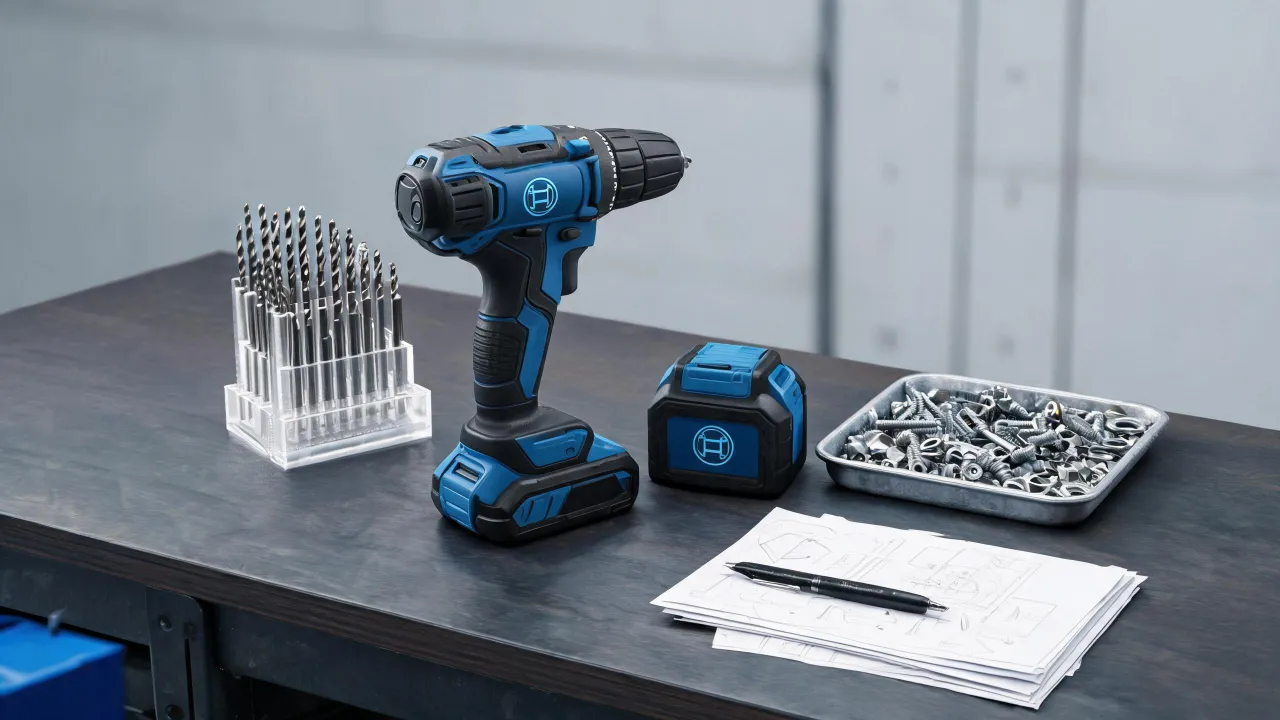
Thursday afternoon, May 16, 2024. I was checking a return bin when the phone rang. A customer on the other end had just ordered a Bosch Professional cordless drill blue (yes, that specific blue model), a 121 piece tool set, and a box of hardware essentials lag thread screw eyes. Then came the question:
Can you put a drill bit on an impact driver?
I'm a quality/compliance manager at a company that distributes power tools and hardware. I review every inbound shipment before it hits the shelf—roughly 4,000 SKUs a year. In Q1 2024, I rejected 6% of first deliveries because of mislabeled packaging or missing accessories. I don't write the manuals, but I do know what fits with what. That question, though, deserved more than a one-word answer.
The mismatch that started it
The customer wasn't asking out of curiosity. They were building shelving in a garage. They planned to use the impact driver they already owned to drive the lag thread screw eyes, and the new Bosch drill was supposed to handle the drilling. Only one problem: the pilot holes were going into oak, and the 121 piece tool set they ordered used round-shank twist bits.
Here's the distinction that confuses most people. A drill uses a keyless chuck. It grips round shanks, hex shanks, even tapered shanks with the right adapter. An impact driver uses a 1/4-inch hex collet. It only accepts accessories with a 1/4-inch hex shank—the same shape as most screwdriver bits.
So can you put a drill bit on an impact driver?
Technically, yes. If the bit has a 1/4-inch hex shank, it will click into the collet. Some drill bits come with hex shanks for this reason. But if you're holding a round-shank twist bit from a typical kit, it won't lock in. You can buy a hex-to-round adapter, but you're adding wobble and losing grip.
What I tested at the workbench
I pulled a blue Bosch Professional drill off the shelf and an 18V impact driver from our demo counter. This was not a lab test; it was a five-minute reality check. I took a standard round-shank drill bit from one of our 121-piece tool sets and tried to push it into the impact driver's collet. It didn't fit. No surprise. Then I found a bit with a hex shank—one of those double-ended drill/drive bits—and it seated correctly. It worked, but it didn't feel precise.
Why? Because an impact driver hammers along the axis as it rotates. That hammering helps drive screws into tough material, but it also creates play. For a pilot hole, you want a clean, centered hole. The impact driver will give you a hole, but it can wander, especially in hard oak.
That's where the Bosch drill should come in. The drill's keyless chuck holds the bit steady, and the variable speed lets you start slow when the screw eye hits the wood. I've seen this pattern many times. When I say “many,” I do not mean just a few—I mean in nearly every project where someone asks this question. They want one tool to do everything. Sometimes it can. This is not one of those times.
In my first year in this role, I made the classic mistake of assuming every drill bit in a set would fit an impact driver. I told a customer it would work. The bit spun, slipped, and shot across the shop. It cost me a replacement set and a bruised ego. Since then, I check the shank before I say yes.
A quick word about that blue
I know I'm overcomplicating a simple question, but there's a reason the Bosch Professional line is blue. It signals a different product family than the green DIY line. For us, that blue is a quality flag. It tells us which specs apply, which spare parts to order, and which battery platform the tool belongs to. If you're ever responsible for branding, color matching has a technical side too. Pantone color tolerances use Delta E; below 2 is considered acceptable for brand-critical colors. I don't know Bosch's exact Pantone number offhand—that's not in my inspection checklist—but the idea is the same: names and colors matter only if they're consistent.
(And if someone asks me about a Bosch dishwasher drain pump, that's outside my expertise. I'd send them to Bosch appliance support. I can't speak to pump specs from a power-tool quality perspective. But I can tell you that buying the right part is just as important as buying the right tool.)
Where the 121-piece tool set fits
The customer's 121-piece tool set is a good starting point. It includes screwdriver bits, sockets, drill bits, and drivers. But “good starting point” doesn't mean “everything you need for every job.” If you're driving a hardware essentials lag thread screw eye into oak, you need a pilot hole and a driver that can handle the torque. The impact driver can handle the torque. The drill can handle the precision. That's why our recommendation was to use them together.
Here's the workflow I gave him:
- Use the drill with a round-shank bit slightly smaller than the screw-eye shaft to make the pilot hole.
- Drive the screw eye in with the impact driver, using a hex-shank nut driver or the correct accessory.
- Do not hammer the screw eye in. It is not a nail.
That last one seems obvious, but we see it in returns more often than I'd like to admit.
The honest take
So, can you put a drill bit on an impact driver? Yes, if you choose the right bit or use an adapter. Will it replace a Bosch Professional cordless drill for drilling work? Not really. The impact driver is built for driving screws and fasteners, not for clean holes. If you're doing occasional, rough drilling, an impact driver with a hex-shank bit might get you by. If you're doing finish work, cabinetry, or drilling into hard wood, use a drill.
I'm not a mechanical engineer, so I can't speak to the exact metallurgy of every bit. What I can tell you from a quality-inspection standpoint is that the right tool for the job is still your best warranty against callbacks and broken parts. That's not a sales pitch. It's a lesson from watching too many customers come back with a dulled bit and a scratched-up workpiece.
And if someone tells you one tool does everything? Ask them to prove it. We tested it so you don't have to.

Maren Jorgensen
Maren Jorgensen is an independent hand tool and torque applications analyst covering wrenches, pliers, screwdrivers, hammers, sockets, ratchets, hex keys, and tool sets. She applies ISO 6789-1 torque-tool conformance principles while examining jaw capacity, leverage, fastener engagement, torque range, accuracy, handle geometry, and material hardness. Her practical guides help tradespeople and procurement teams select suitable tools, plan controlled tightening, and compare durability without relying on brand reputation alone.