Bosch Tools FAQ for Office and Facility Buyers: Drills, Nail Guns, Screwdrivers, and Grinders
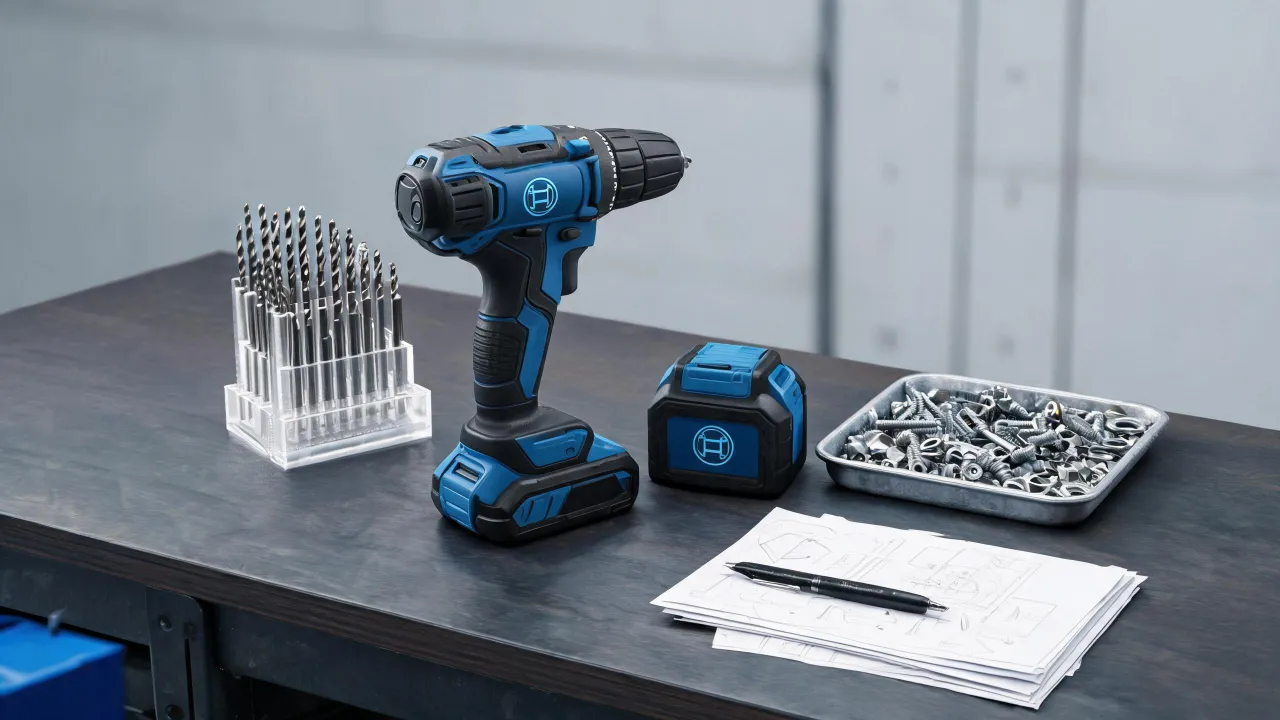
-
Bosch Tool Buying FAQ for B2B Facility Teams
-
1. What should I know before buying a Bosch electric drill for our facilities team?
-
2. Is the Bosch GBM 6 RE CH drill still a good choice for light maintenance?
-
3. Is the best nail gun always the biggest one?
-
4. Do I need an angle grinder, or is it overkill for office maintenance?
-
5. What should I look for in a tools screwdriver set for multiple departments?
-
6. Corded vs cordless Bosch tools: which is better for procurement?
-
7. How do I avoid expensive rework when buying Bosch tools for a team?
-
1. What should I know before buying a Bosch electric drill for our facilities team?
I'm an office administrator for a 180-person company. I manage all facilities and maintenance tool ordering—roughly $45,000 annually across 12 vendors. I report to both operations and finance, so I care about invoices, safety, and whether the team can actually use what I buy.
This FAQ is what I wish I'd had when I started buying Bosch tools for our facilities crew. It's not a spec sheet. It's the stuff that causes rework, rejected expense reports, and awkward emails after a drill dies mid-project.
Bosch Tool Buying FAQ for B2B Facility Teams
1. What should I know before buying a Bosch electric drill for our facilities team?
First, figure out the job. A Bosch electric drill can mean a compact corded drill, a cordless drill/driver, or a hammer drill. For a 180-person office, most tickets are furniture assembly, TV mounts, shelving, and light repairs. A 12V or 18V cordless drill/driver is usually the no-brainer. If you're drilling into concrete or brick, get a hammer drill. If you're mostly drilling metal or wood at a bench, a corded Bosch GBM 6 RE CH can be enough. Check chuck size, clutch settings, and battery platform. In my opinion, the real deal-breaker is battery compatibility. If you already own Bosch 18V batteries, stay in that system. If not, price the starter kit, not just the bare tool. Five minutes checking your existing kit beats buying a drill with no charger. Bosch's official product pages as of January 2025 list specs, but verify current bundles with your supplier.
2. Is the Bosch GBM 6 RE CH drill still a good choice for light maintenance?
Honestly, I have mixed feelings about the Bosch GBM 6 RE CH drill. On one hand, it's a compact corded drill that's pretty good for light metal, wood, and plastic work. No battery downtime, no charger to lose, and it's usually easy for a non-specialist to grab and use. On the other, it won't replace a hammer drill for masonry, and the cord is a trip hazard in tight spaces. If your team already has 18V cordless tools, a bare cordless drill may be more practical. If you need a dedicated bench drill for small maintenance tasks, the GBM 6 RE CH can be a sensible backup. I don't have hard data on how often it outsells cordless options, but based on our last three years of orders, cordless gets used way more. The prevention angle: list the actual tasks before you buy, then match the tool to the task, not the other way around.
3. Is the best nail gun always the biggest one?
There's no single answer to 'is the best nail gun?' Anyone who says otherwise is probably selling something. The right one depends on what you're fastening. For office and facility work, an 18-gauge brad nailer is usually enough for trim, panels, and light wood. A finish nailer handles thicker trim and cabinets. A framing nailer is rarely needed unless you're doing structural work—and that's a different safety conversation. Check the gauge, fastener availability, and whether it's pneumatic or cordless. Cordless nailers cost more upfront but save setup time. Pneumatic ones need a compressor, hoses, and maintenance. If you ask me, the best nail gun is the one your team can load safely and find nails for locally. Bosch's focus is broader in drilling and fastening than in every nailer category, so compare specs carefully. Buy extra fasteners—running out mid-job is a classic self-inflicted delay.
4. Do I need an angle grinder, or is it overkill for office maintenance?
Do I need an angle grinder? Only if you're cutting metal, grinding welds, removing rust, or cutting masonry. For a typical office, that's rarely a weekly task. I have mixed feelings about buying one just in case. Part of me likes having one on the shelf. Another part knows that an angle grinder is one of the most dangerous tools in a maintenance closet if nobody's trained. It needs a guard, proper wheels, eye and face protection, and a competent operator. If you have occasional tasks, renting or borrowing may be smarter than buying. If your team does regular metal fabrication or repairs, a corded 4.5-inch grinder is usually the practical starting point. The prevention rule: don't buy an angle grinder without also budgeting for PPE and training. Otherwise it's not a tool, it's a liability.
5. What should I look for in a tools screwdriver set for multiple departments?
For a shared tools screwdriver set, durability and organization matter more than a huge bit count. Look for hardened steel bits, a comfortable handle, and a case that keeps sizes labeled. If your team touches electrical panels, add insulated VDE screwdrivers—but only if they're rated and the users are trained. Buy two sets: a precision set for IT and small electronics, and a standard set for facilities. In my opinion, cheap sets are a false economy because stripped bits frustrate people and slow down simple jobs. I don't have hard data on loss rates, but anecdotally we lose more 10mm and Phillips bits than anything else. Label the case with a department name, and check it back in after jobs. That five-minute habit has saved us a ton of replacement orders. Bosch makes screwdriver sets, but any professional-grade set with clear sizing can work—just verify the bits match your actual fasteners.
6. Corded vs cordless Bosch tools: which is better for procurement?
It's basically a trade-off between upfront cost, flexibility, and battery ecosystem. Corded Bosch tools are usually cheaper to buy and don't age out when a battery platform changes. Cordless tools cost more initially, but they get used more because they're faster to grab. For B2B purchasing, standardize on one battery platform if you can. That's the difference between one charger and a closet full of orphaned batteries. To be fair, corded tools still make sense for bench work, high-draw tools, and backup. Granted, cordless saves time, but you need a battery management process: label batteries, track chargers, and replace worn packs. I'd argue the hidden cost isn't the tool—it's the downtime when a crew shows up with a dead battery. A simple checkout log and two spare batteries per high-use tool is cheap insurance. Verify current Bosch bundles and warranty terms with an authorized supplier as of January 2025.
7. How do I avoid expensive rework when buying Bosch tools for a team?
Prevention over cure is the whole game. I learned this after a vendor shipped our order with a handwritten receipt. Finance rejected the expense report, and I ate $2,400 out of the department budget. Now I verify invoicing before placing any order. For tools, the same logic applies: confirm the return window, warranty process, and whether the supplier is authorized. Ask your team to test the tool on a real task before you roll it out. A 12-point checklist sounds boring, but it's the cheapest insurance you'll ever buy. Before purchase, check voltage, chuck size, battery platform, safety gear, and training needs. After delivery, log serial numbers and store manuals. Five minutes of verification beats five days of correction. If a supplier can't provide a proper invoice and clear warranty terms, that's a red flag—not a bargain.

Amara Nwosu
Amara Nwosu is an independent hydraulic tool and pump systems analyst covering jacks, cylinders, pullers, torque wrenches, hand pumps, power pumps, and porta-power equipment. She applies ISO 4413 safety principles while examining rated pressure, cylinder force, stroke, oil volume, flow, return type, hose condition, load holding, pressure loss, and relief protection. Her technical guides help maintenance and construction teams configure compatible systems, verify safe capacity, and diagnose slow or unstable operation.