The Piecemeal Buying Trap: Why Chasing the Lowest Price on Tools and Parts Cost Us More
What I Thought the Problem Was
When I took over MRO purchasing for our 300-person company in 2020, I thought I had it figured out. The job seemed straightforward: get three quotes, pick the cheapest one, move on. That's what the previous admin did. That's what I assumed "good procurement" meant.
We spend roughly $180,000 a year on maintenance, repair, and operations supplies. That covers everything from power tools for our facilities team to plumbing components to chainsaw bar and chain replacements for the grounds crew. Different departments, different needs, different vendors.
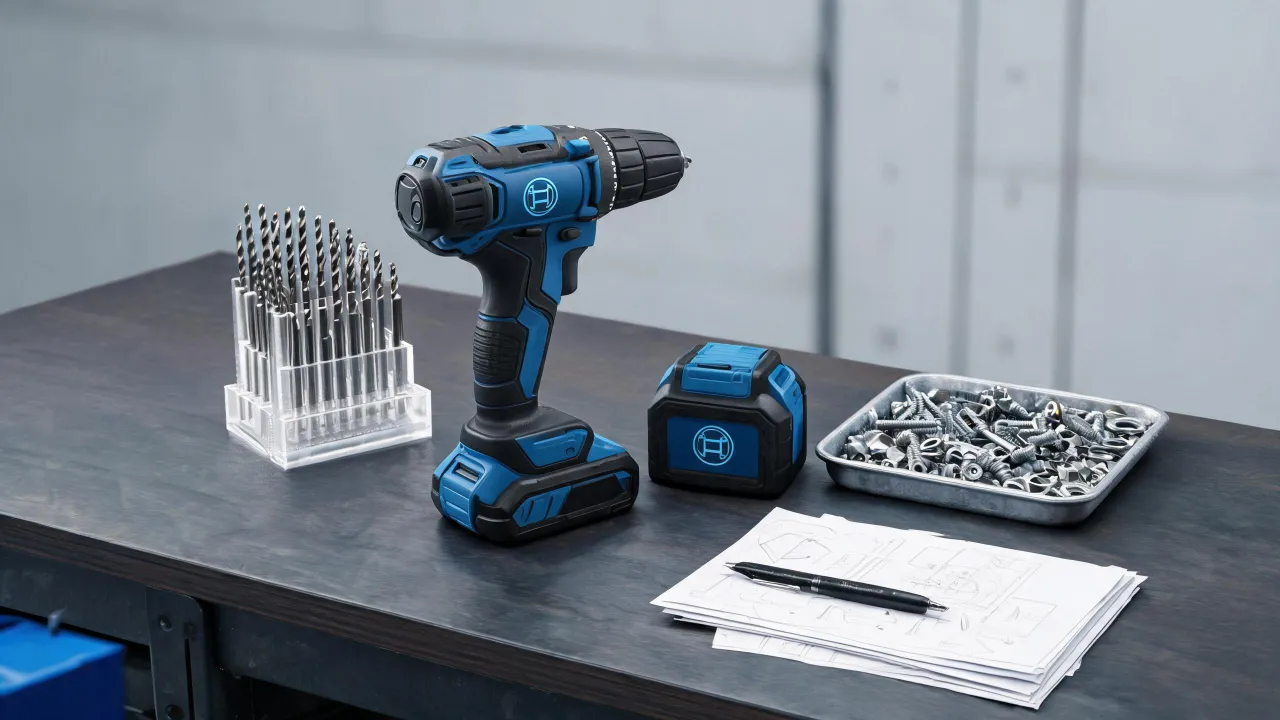
For the first year, I optimized for price. I found a Bosch GSR 18V-45 Professional cordless drill for $30 less than our regular supplier. I sourced ball valves from a discount distributor. I bought a 3-piece ball valve set for one of our HVAC maintenance jobs at what I thought was a great deal.
And on paper, my cost-per-item metrics looked excellent.
Then my VP asked me a simple question during our Q4 review: "Why are we ordering from 14 different vendors?"
I didn't have a good answer. What I had was a spreadsheet full of individually optimized purchases that, collectively, were creating a mess I couldn't see from inside the spreadsheet.
What the Problem Actually Is
Most buyers focus on unit price and completely miss the administrative cost of fragmentation. I was guilty of exactly that. Every new vendor I added to chase a lower price added a new invoice format, a new payment timeline, a new contact person, and a new set of terms I had to track.
Here's what I didn't understand for the first 18 months: the cost of a purchase isn't the price on the invoice. It's the price plus the time it takes to manage that vendor relationship, plus the risk that something goes wrong and you have no leverage because you're a small account.
When I compared our vendor list in Q1 2022 versus Q4 2022—same total spend, different structure—I finally understood why finance kept flagging our department for "process inefficiencies." We had 14 vendors for what should've been maybe 5 or 6. Each one required separate onboarding, separate W-9 collection, separate payment setup.
Our accounting team estimated they spent about 6 hours a month just processing our vendor payments. That doesn't sound like much until you realize it's 72 hours a year—nearly two full work weeks—spent on administrative overhead that added zero value to the actual work.
"The question everyone asks is 'who has the best price?' The question they should ask is 'what does this vendor actually cost us in total?'"
But the deeper issue wasn't just administrative bloat. It was that piecemeal buying meant we had no real relationship with any of our suppliers. We were a transaction, not a customer.
That matters when something goes wrong. And something always goes wrong.
The Invoice You Never See
In early 2023, our facilities manager needed a Bosch VDE SL/PH insulated screwdriver set for a job that involved working near live electrical panels. I found it online from a third-party seller for about $12 less than what our main industrial supplier quoted. Ordered it. Saved the company twelve bucks.
Three weeks later, the set arrived—and it wasn't the right one. The seller had listed it as the VDE insulated version, but it was the standard set. By the time we sorted out the return and reordered from a legitimate source (our industrial supplier, who had it in stock the whole time), we'd lost 11 days and the electrician had to reschedule twice.
The rescheduling alone cost us more in downtime than the $12 I "saved."
That's the thing about fragmenting your buying across too many vendors: you have no leverage when things go sideways. Our main supplier would've caught the error before shipping because they know our account, they know what we order, and they know the difference between VDE-certified tools and lookalikes.
This pattern repeated itself across categories. When we needed to source 3-piece ball valves for a water line repair, I went with the cheapest online option. The valves were fine—but they came with no installation documentation, no compliance certificates, and a return policy that required me to pay shipping both ways if something was wrong. We got lucky that time.
When our grounds crew needed a replacement chainsaw bar and chain, I found a deal that saved us about 20%. But the bar didn't match the saw's specifications exactly, and we ended up having to return it anyway—except by then, the grounds crew had already spent two hours trying to make it work before giving up.
The pattern was clear: I was saving 10-20% on individual line items and losing 100% of that savings—plus extra—in time, rework, and frustration.
The Cost Nobody Budgets For
Let me put real numbers on this. In 2022, our MRO spend was about $180,000. My price-optimization efforts saved us, on paper, around $8,000 compared to the previous year's pricing. That's about 4.4%.
But our accounting team's time processing fragmented vendor payments—which we later calculated at roughly 72 hours annually—cost the company about $3,600 in loaded labor. My own time managing 14 vendor relationships instead of 5 or 6 added another estimated $4,000 in administrative overhead. And the operational disruptions from wrong orders, late deliveries, and quality issues cost us at least $6,000 in rescheduling and rework.
Net result: I "saved" $8,000 and cost the company about $13,600. I was actually negative $5,600.
I share that number because it took me a while to accept it. I was proud of my cost-per-item metrics. I didn't want to admit that I'd been optimizing the wrong thing.
Around this time, our company was also evaluating equipment for a new fabrication capability. Someone asked me to research what is a laser welding machine and whether we should invest in one. I spent a week going down a research rabbit hole—different types, different power ratings, different vendors—before realizing I was doing the same thing all over again: trying to learn everything myself instead of working with a supplier who actually knew the category.
That was the moment I changed my approach.
What Actually Works
I consolidated us from 14 vendors down to 5. Not because I got better pricing—honestly, our per-item costs went up slightly on some categories—but because the total cost of ownership went down.
Our main industrial supplier now handles tools, safety equipment, and most MRO supplies. They hold our Bosch account, which means when we need a GSR 18V-45 Professional or the VDE insulated screwdriver set, they know exactly what we're asking for. They flag compatibility issues before we order. That alone has saved us from at least three wrong-purchase situations in the past year.
For specialty categories—like ball valves or chainsaw bar and chain replacements—we use one or two dedicated suppliers who understand those product lines. Not the cheapest, but reliable, with proper documentation and return policies that don't penalize us for their mistakes.
And for things we only need once or twice a year—like the laser welding machine research—I now lean on our primary supplier's technical team instead of trying to become an expert in every category myself.
The fundamentals of good procurement haven't changed: get good pricing, ensure quality, manage risk. But the execution has transformed. "Best price per item" is a metric that looks great in a spreadsheet and fails in practice.
What was best practice in 2020—optimize every line item independently—doesn't apply in 2025. The administrative friction of managing too many vendor relationships is a real cost, and it's one that doesn't show up until you step back and look at the whole picture.
I still check prices. I still negotiate. But I do it within a consolidated vendor structure that makes the total cost visible. That's the difference between saving money on paper and actually saving money for the company.

Victor Salcedo
Victor Salcedo is an independent fastener, anchor, and spring analyst covering screws, bolts, nuts, washers, rivets, anchors, compression springs, extension springs, and torsion springs. He uses ISO 898-1 property classes alongside clamp-load, thread engagement, proof load, corrosion exposure, anchor substrate, spring rate, travel, and fatigue-cycle checks. His engineering explainers help designers and buyers specify reliable joints or elastic elements, compare materials and finishes, and avoid mismatched strength assumptions.